
In today’s society, there is an awareness that diversity is important not only as a concept, but also for real bottom line improvements. While this is good news, there is still a long way to go. I recently had the privilege of joining a panel that discussed the successes and challenges facing women in terms of equal pay, gender parity/blind bias, and upward mobility.
“Press for Progress” was sponsored by The Boston Club and held at the offices of Ernst & Young. First, my thanks to our moderator, Tara Alex, an Insurance Partner at E&Y, and my fellow panelists: Linda Rossetti, social entrepreneur and board member; Agnes Bundy Scanlan, who is on multiple boards and an advisor at Treliant Risk Advisors; and Jane Steinmetz, the Managing Principal for E&Y’s Boston office.
The overall feedback from this panel is positive – there is more focus on improving gender parity today, and sponsorship is key to that improvement. When you have a sponsor, someone is advocating for you; they have your best interests in mind and can recommend you for important assignments. The other key takeaway is the importance of having multiple women and minorities in the candidate pool for new hires.
Gender Parity and Sponsorship
The panel provided actionable advice both for women trying to get ahead and for their mentors. It was clear from the panel’s experience, as well as the audience’s, that each individual’s journey is personal and gender parity mandates don’t work. Because each experience is different, the power is shifted to the employee to own their experience and make the most of it. Employees need to leave “breadcrumbs” along the way so that when opportunities arise, the managers making the decision know what you have accomplished. Whether it is seeking a board seat or a new career path, if no one knows what you want (and you have not networked to get the message out) then it will be difficult for the hiring folks to find you.
An interesting Harvard Business Review article by Stefanie K. Johnson, David R. Hekman, and Elsa T. Chan delves into the statistics around the number of diverse candidates presented and its impact on selection. Titled “If There’s Only One Woman in Your Candidate Pool, There’s Statistically No Chance She’ll Be Hired,” the article’s premise is that people are invested in maintaining the status quo. That means if two men and one woman are presented as equally qualified, employers tend to hire a male. The panel discussed making the candidate pool richer with more women and minority candidates, and how this could shift the odds.
The women on my panel have all played a sponsor role in their organizations. They talked about looking at a slate of candidates and finding opportunities to position them, so they are ready for the next opportunity. But this can only be done if the sponsor is aware of what you want and desire as a potential job candidate. This requires you as an employee to own your narrative, find your voice, identify what is of value to you, and link it to the organizational purpose.
Taking Risks
It is also clear that women often wait until they are fully qualified for a job before they apply for it, whereas men are more likely to take a risk and sell the vision of what they can/will do. IBM CEO Ginni Rometty states, “I learned to always take on things I’d never done before. Growth and comfort do not co-exist.”
With each risk you take, you build confidence. The first risk is the toughest, and if you’re successful, each subsequent risk is easier. Changing jobs is scary, but this lets others perceive you in a different light and provides momentum to your career. Even if you fail, you will realize what the issue was – wrong organizational fit, skills mismatch, more travel than you understood it to be, etc. – but by taking the risk you’ll be better prepared for when you make the next decision.
Upward Mobility
Pay parity and advancement were topics of particular interest to women who take an extended parenting leave and then return to the workforce. The panel’s advice was that you need to align yourself to market value, not your former salary. Do the work, find the data, and present your case. Today there is more transparency in salaries with sites like Glassdoor, so use this to your advantage. Remember, it is much costlier for your employer to lose you as an employee than to provide you a market-value salary. Also, step back and look at patterns. If you have seen other people’s careers go off track, this is where you must convey your own narrative to decision makers and voice your expectations about what you need to make it work.
Another point women should consider as they negotiate salary and benefits, is that silence is OK. In fact, it is often a powerful negotiation tool, so use it to your advantage. One final point is that you don’t have to do a job the way your predecessor did. Make it your own. If your family obligations don’t allow you to be out every night of the week, then figure out what does work for you and own it.
Further Diversity Research
I looked further at the research and the Harvard Business Review has a series of articles on the latest studies in diversity. One article by Evan Apfelbaum, titled “Why Your Diversity Program may be Helping Women but not Minorities (or Vice Versa),” looks at the problem of lumping women and minorities into one bucket. “The fact is that 40% of women make up all employees in a professional setting, whereas black women and men by contrast rarely comprise more than 5% of employees in these same settings.” These statistical differences affect how concerned people are with “sticking out” as representatives of their group. While the “value in difference” approach may energize groups, like white women, the very same message may, ironically, undermine groups who are represented in smaller numbers, like black women and men.
In the end, business is conducted by people and the way to enhance performance and decrease turnover is to provide all groups the same opportunity to succeed.
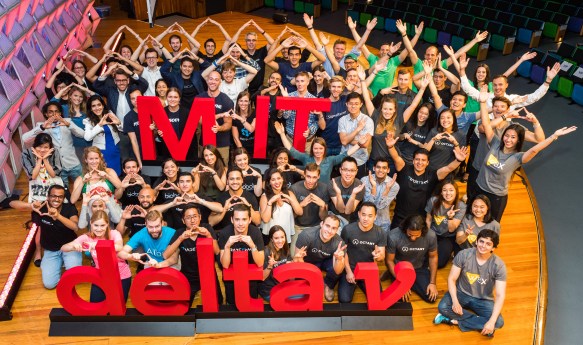 On June 12, we’ll open the doors to this summer’s
 which focused on deep tech and what governments, universities, entrepreneurs, and corporations are doing to speed research from R&D labs to make a real impact on society. I was fortunate enough to spend time with entrepreneurs, potential entrepreneurs, and those supporting entrepreneurship in the Nordics, and the experience taught me quite a lot – including not to filter my view of entrepreneurship with a US-centric lens.
 worker also receives free health insurance in a system that produces longer life expectancy and lower infant mortality rates than in America. At age 67, workers get a government pension of up to 66 percent of their working income.
 make necessary investments for the future, we have a strong growth of entrepreneurial focus and companies. This is all about how we prioritize, reposition investments, build competence, and have the guts to make important, and maybe radical, political decisions today to secure tomorrow.”
 Call it the problem of the middle—the middle states and the middle class—two groups that have struggled with problems that, while they are inexorably linked, are different all the same.
 I have recently been catching up with colleagues from companies past, and when I let them know what I am doing now, I often get the reaction, “Wow! That’s such a cool job.” And it is … I’m fortunate to be the director of
 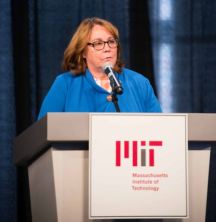 The organization I worked at most recently, prior to MIT, was IBM – a company that is trying to bring data analytics insights to companies, so they can address real world problems. The complexity of what both our MIT startups and IBM are doing, albeit in different ways, struck me. Are they so different? I have deep respect for IBM’s CEO, Ginni Rometty, who is moving a company the size of a small nation. However, the leaders of the MIT three-person startups are also scaling difficult challenges and placing bets with tremendous odds of failure.
 Is MIT any different than a corporation? The complexities of a university rival corporations, but the opportunity to be immersed in new technology brings me back to my days at Honeywell. Working with our startup teams, I feel like a first year engineer every day. The
  Are you ready to be inspired? MIT’s student venture accelerator,
  Here’s a brief overview of each startup that presented at Demo Day (in alphabetical order). Remember them. It’s likely you’ll be able to point back and say, “I saw them when they were just a startup at MIT…”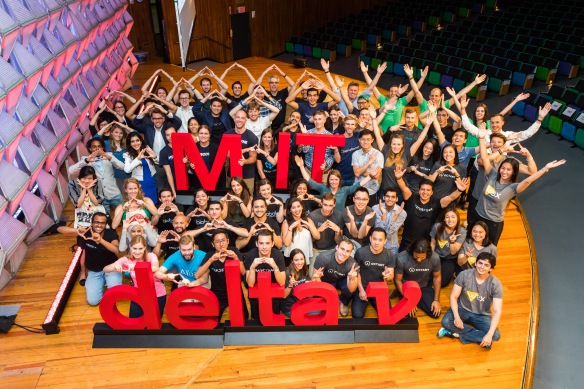
 Gender bias is sneaky. It’s often subtle, yet pervasive – and the effects are far reaching.

 “As an engineer, I started asking questions about how things work. I wondered ‘Who is going to fix these big problems in the world?’ Then, it dawned on me … I can help fix these problems.”
 Trish Cotter