A Discussion on French Entrepreneurship with John Chambers

20170317_ilead_John_Chamber_Cisco_March_2017_RUIZ-38

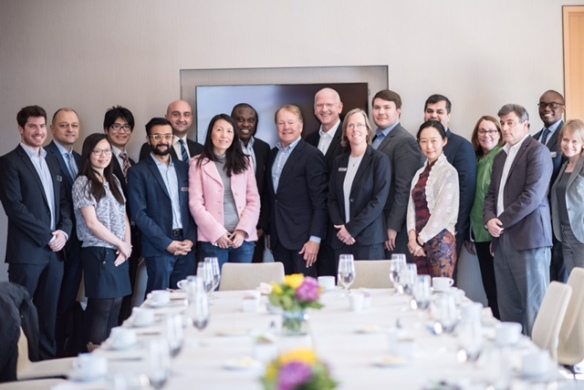
I recently had the unique opportunity to join selected MIT faculty, students, and staff to discuss the current business climate with John Chambers, the Executive Chairman of the Board and former CEO of Cisco Systems. He was the guest of honor at a recent MIT Leadership Center luncheon and it was pure luck that I ended up sitting next to him as our meal was served.

My question to John was: what he thinks we should be doing to educate entrepreneurs today (that is currently lacking). Although he didn’t answer that question directly, he did talk about the differences in East Coast and West Coast philosophies. The West vs. East innovation discussion is always a good one (see my blog on Massachusetts being ranked the most innovative state in America) and it was clear that John felt that in Silicon Valley, it is more important to be a founder/key engineer than is to be the CEO of a Fortune 100 company.
Paris conferenceWe then started discussing innovation in other countries, particularly France, in light of my upcoming keynote speech in Paris at the symposium on Entrepreneurial Research: Past, Present and Future. John remarked that the French entrepreneurial ecosystem is actually as large as Boston’s. I was a bit surprised, but also intrigued as I’ve been researching how the French approach entrepreneurship to prepare for my presentation.

Here are some of the highlights of my research I thought I’d share:

  • The French business environment has undergone radical change in recent years. Investment activity in French startups has been on a steady rise. Moreover, it is coming from all sides of French society – the government, the corporations, and the new wave of entrepreneurs. In addition, France has over 100 venture capitalists who invested more than $2 billion in 2016.
  • This activity has changed the general attitude among the younger generation towards entrepreneurship. Up until 2012, France’s best talent was driven to big firms. However, now more than 50% of young people between the ages of 18 and 24 want to start a business, and 1 in 3 of France’s 70,000 Ph.D. students also want to create their own business. At this moment, France has more than 50 startup accelerators, and more than 100 co-working spaces have opened their doors recently.
  • President Hollande’s socialist government has made fostering startups an economic priority with a cohesive policy that has included:
    • Tax incentives for new businesses
    • Government and public sector funding
    • Creation of Special Tech Programs on national and regional levels
    • New crowd-funding legislation
  • The weak point of French VCs is lack of sufficient capital for later-stage funding rounds, forcing many promising French startups to look abroad for their financing needs or get acquired by global multinationals.
  • According to French government, more than 550,000 startups are created each year. More than $2 billion was invested in French startups in 2016. Three startups raised more than $100M:
    • Sigfox (IoT ecosystem)
    • Deezer (Music streaming)
    • Devialet (Sound technology)
  • According to European Digital City Index (EDCI), Paris is the 5th best city for startups in Europe. According to the Compass 2015 Global Startup Ecosystem Ranking, Paris is the 11th best ecosystem for startups globally.
  • Brexit creates excellent opportunity for France to lure best tech startups from UK and transform itself into the #1 European and one of the leading global startup hubs.
  • The presidential elections that will be held in April and May 2017 should be carefully watched. The possible win of Mr. Macron could be a big boost for the French entrepreneurial ecosystem since his tenure as a Minister of Economy was huge boon for the French startup ecosystem.

As Americans we tend to critique French capitalism due to issues such as a high level of government intervention, inflexible labor laws, a fear of failure among entrepreneurs, and the lack of innovation.  However, all this is changing.

I look forward to my visit to Paris in the springtime and will share what I learn at the symposium.

french flag

We’re on Fire!

mittrustcenter2-bwMIT’s Martin Trust Center: Quietly Educating and Empowering Students to Positively Change the World

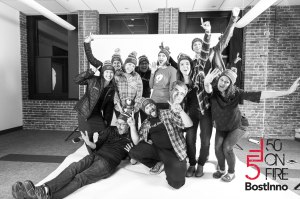
Our fantastic team at MIT’s Martin Trust Center for Entrepreneurship was recently selected for a BostInno 50 on Fire” award recognizing innovative individuals and organizations in and around Boston!

We were excited to join BostInno’s year-end celebration, held at the Moakley Courthouse on the waterfront, which recognized the city’s inventors, disrupters, luminaries, and newsmakers. Over 800 nominations were submitted for the awards, which were culled down to a list of 150 finalists. From those finalists, 50 were selected by a panel of judges to claim the title of “50 on Fire.” Here’s a list of all the winners, and the finalists in the Education category – our kudos to BUILD, Panorama, and Shorelight Education, the other winners in our category.

When MIT’s Martin Trust Center was announced as a winner, a cheer rose up from our staff. It was a powerful reminder that while we celebrate our students all year round, once in a while we need to celebrate the staff for the time and effort they put into creating and executing innovative and thought-leading programming.  A quick overview for those of you unfamiliar with the Trust Center …

The Martin Trust Center for MIT Entrepreneurship, as the name implies, fosters entrepreneurship at the Institute. It serves all students across all schools and disciplines.  At the Trust Center, we provide MIT students proven frameworks, a global network of experts and a dynamic home to develop their skills using our curriculum and programs. Our goal is to be entrepreneurial leaders by advancing the field of entrepreneurship at MIT and around the world.

In June, the center unveiled its remodeled and expanded co-working digs, which can better accommodate startups on campus, host larger events centered on entrepreneurship and has a new makerspace called Protoworks. The Trust Center is also home to “delta v,” MIT’s student venture accelerator. The accelerator provides a capstone educational opportunity for MIT student entrepreneurs preparing them to hit escape velocity and launch into the real world, culminating in the accelerator’s Demo Day.

Our team at the Trust Center includes: Bill Aulet, Alicia Carelli, Elaine Chen, Eliza Deland, Pat Fuligni, Sorin Grama, Donna Levin, Tommy Long, Leah Lovgren, Erin Martin, Nick Meyer, Laurie Stach, Marvin Wilma, Greg Wymer, and all those that have gone before us…. The center is a rotation of folks who bring fresh perspectives and raise the bar on our thinking.

We believe it is important to view entrepreneurship as a craft, and we provide apprentice-like experiences for our students. These students want to make a positive impact in the world, and we enable that through our innovative, well-executed programming, along with the community support that makes the Trust Center so special.  We don’t shed a spotlight on it too much, but once in a while it is nice to shine a light on a creative team that executes in a world-class manner…that is the Martin Trust Center, and I’m proud to be a part of it!  Entrepreneurship is a craft that can be taught. Want to see more? This video captures all the winners clowning around during the photo shoot. Thanks to BostInno for showcasing the innovative talent we have here in Boston!

P.S. I’d also like to give a shout out to friends of the Trust Center who were at the awards including Drift, Pill Pack, Melissa James, Coach Up, Paul English, and Katie Rae, just to name a few …

Celebrating Sisterhood at “The Stevies”

31136830665_7f234bfc57_o-2There is something empowering about being in a room with 650 women celebrating accomplishments …  I was recently nominated for a Stevie® Award, and attended the awards ceremony in New York City with my sister.  This got me to thinking about sisterhood in the broader sense, and how much we all have to be thankful for.

I was honored to receive a Gold Stevie award for the “Mentor of the Year” category at a non-profit organization. At MIT’s Martin Trust Center for Entrepreneurship, I work with an amazing team that makes going to work every day a pleasure. As a mentor and lecturer it is a privilege to work with students at MIT from around the world on projects and companies that are making a positive impact in the world.  Given the state of the world today, working with such a bright and talented group of entrepreneurs makes me hopeful for the future, and is something I wish everyone could experience.

Although I have been previously honored in my career as a corporate executive, my role at MIT is still relatively new, so recognition that I am on the right track was significant to me.  One of the comments in the judges’ feedback was especially meaningful, because it seemed to capture why I chose this role:

“Trish Cotter is a testament to the spirit of ‘paying it forward.’ Instead of continuing an impressive career as an entrepreneur, she decided to change course and share her knowledge, passion and drive for entrepreneurship with the blossoming business women and men of today. She takes a hands-on approach to help these young entrepreneurs succeed, and is with them every step of the way. We all got our start by someone giving us a chance, Trish is an exemplary pillar of that message.”

The Stevie Awards are the world’s premier business awards. They were created in 2002 to honor and generate public recognition of the achievements and positive contributions of organizations and working professionals worldwide. More than 1,400 nominations were submitted for this year’s awards from 31 nations and territories. This celebration was streamed across the world, and was also shared in person with family and friends.

At our table, my fellow honorees included Jenny Feing (Coach Training School), Shannon Beurk (Founder Engage2Learn), and Melinda Durkee (Proforma Durkee), and each brought family and friends to share their evening.  I’d also like to send a shout out to Steph Speirs from Solstice (a company from the MIT delta v accelerator), who was a finalist as Female Executive of the Year for her community solar company.

In this season of gratefulness and giving, I’d like to thank all of those who have helped me along the way. As a mentor and coach, I hope I am doing my best to pay it forward and give others a chance.

P.S. What could be better to experience the Stevies, and then see the unveiling of the Christmas windows at Macy’s?!  A true evening of sisterhood, accomplishment, empowerment, and hope for the future!


Shining a Light on Female Entrepreneurs in Tech

Last night, MIT’s Martin Trust Center hosted a screening of the award-winning documentary “She Started It” which follows five women in their journeys to launch businesses in the technology industry. We were honored to have the director and co-producer of the film, Nora Poggi , with us to introduce the film and join in our discussion along with our own panel of budding tech entrepreneurs.

The event was inspiring and featured accomplished women who beat the odds. If one message came through “loud and clear” it was that the entrepreneurial journey is all about persistence and networking. Our discussion reinforced that entrepreneurship can be taught, and that practicing entrepreneurial skills will pay off in the end.

The “She Started It” film focuses on five female entrepreneurs and their experiences, along with empowering the next generation of women tech founders. (You can check out the trailer here.) The film cited statistics about being a female entrepreneur in the technology industry that were bleaker than a cross-industry perspective. For example:

  • Women create only 3% of tech startups
  • In Silicon Valley, women earn only 49 cents to a man’s dollar
  • Women receive less than 10% of venture capital funding
  • Only 12% of undergrad computer science degrees are earned by women
  • 96% of venture capitalists are men

Yet, the five women profiled in the film are out to break the mold.

headerimage

Following the screening, I moderated a discussion with Poggi and a panel of female founders sharing their own experiences. They included:

  • Elsa Sze of Agora which uses technology to bring more people to the civic conversation
  • Melissa James of The Tech Connection, a premier marketplace for purpose driven, diverse technical talent
  • Alex Wright-Gladstein of Ayar Labs which brings high bandwidths and energy efficiency of fiber optics to silicon chips
img_0076_cropped

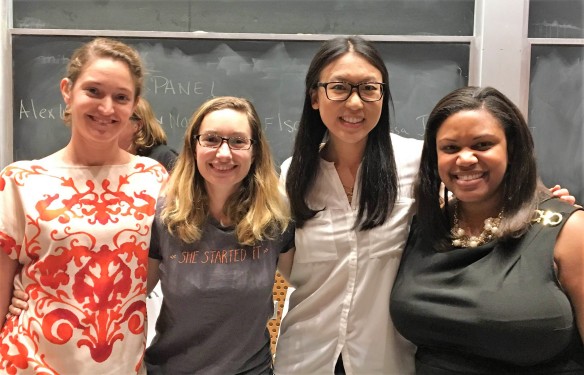
L to R: Alex Wright Goldstein, Nora Poggi, Elsa Sze and Melissa James


The panelists discussed challenges and what is most intimidating about starting a tech business. The audience – which included many women in the process of exploring entrepreneurship for themselves was extremely engaged and had many questions. We also talked about how today’s female entrepreneurs can be role models to help other women and girls embrace the entrepreneurial path. Essentially, “you can’t be what you don’t see.”

One of the insightful quotes in the film is from Meghan Smith, Chief Technology Officer for the United States. She says, “There have always been women and minorities in all of the areas of technology for all history. It’s just the stories are less known. And so, we need to embrace our history and tell it to each other.”

Although women are a small minority of tech startup founders, it is also an issue that many women tend to understate their achievements, and not let their own light shine. “She Started It” is a first step to showcase some of these achievements. My thanks to everyone who participated in our event! It was a great success!

P.S. On a personal note, this week I received the exciting news that I’ve been selected as a finalist for the Stevie Awards for Women in Business the category of mentorship. As I worked with the panel for this our film event, I drew parallels to my own submission for the Stevie Awards. Often, as women, we dismiss the things that we do and don’t let our own lights shine (especially when surrounded by all the brilliance here at MIT). For me, this is a reminder to value our successes and share them with other women.


It’s a Wrap: MIT’s Educational Accelerator Demo Day 2016!

mit-gfsa-demo-16

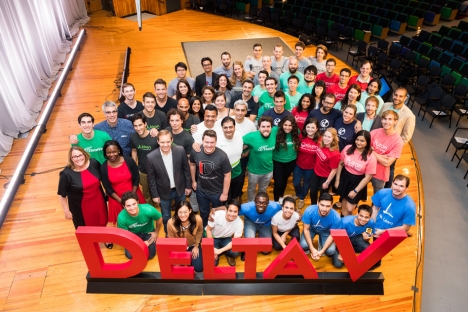
Congratulations to all of the teams that presented at our Educational Accelerator Demo Day! We kicked off MIT’s campus-wide t=0 celebration of entrepreneurship and innovation, which will continue through September 18.

If you couldn’t join us, this post gives a quick recap; and you can catch all of the presentations on video as well. For an overview of the companies presented, check out this BostonInno article – “These are the 17 Startups MIT Kept Hush-Hush this Summer.”

First of all, in my last post I had let you know that our Global Founders’ Skills Accelerator (GFSA) would be changing its name. We are now MIT’s delta v accelerator.  Why the name change? The derivative of velocity is acceleration!  Hence, the MIT Acceleration Program delta v.

delta v literally means a change in velocity, and we believe this truly captures what happens to these students when they join us for MIT’s accelerator program.

The delta v Demo Day is focused on MIT students, and students filled the auditorium and were even sitting in the aisles. Our Managing Director Bill Aulet kicked of the program and explained how these startups have reached “escape velocity” and have been “kicked out of the house” so to speak.

Bill was followed by keynote speaker Dharmesh Shah, the CTO of HubSpot and an MIT grad. He talked about increasing the success for these student startups – how to get started, why you should avoid stealth mode, why speed matters, how to find a co-founder, attract amazing people, and give yourself crazy ambitious goals. He tells students to take advantage of all your classes to hone your skills… and he says he has never heard of a single entrepreneur who regrets taking a shot at a startup (even if it failed).

Governor Charlie Baker also joined us at Demo Day, and spoke about the amount of wizardry that comes out of MIT and the staggering contribution that MIT has made to the Commonwealth of Massachusetts, the country and the world.

It was then on to the student presentations. Fourteen startups made it through to Demo Day, and their company ideas covered topics from mental health to virtual reality.  We saw compelling videos from farmers whose lives have been changed because of MIT students, transportation in Rwanda and Mexico that will reduce costs for carriers, a way to make freight transportation more efficient and increase the income of truck drivers, and several ways to improve the environment.  We learned about innovations could change the lives of families dealing with cancer treatment and students in Africa.

Interested in learning more? Check out the companies that presented. They are listed below, in alphabetical order, along with links to their websites.  And, if you have a bit more time, check out the teams presenting in our Demo Day video recording.

Alfie
Armoire
Deepstream
dot Learn
Emerald
Factory Shop
FleteYa
Hive Maritime
kiron
Kumwe Logistics
Lean on Me
Leuko Labs
perch
Rendever
ricult
Solstice Initiative

I think everyone who attended Demo Day was inspired and impressed by the power of entrepreneurship at MIT. Now, we’re onward and upward, with t=0 this week with a full schedule of activities every day. Later this month, the delta v teams will be heading to New York City and San Francisco to meet with alumni and investors.

We hope you are inspired too!

Join us September 9th for MIT’s Educational Accelerator Demo Day!

demo-day-banner

I’m wrapping up “boot camp” with this year’s MIT Global Founders’ Skills Accelerator (GFSA) cohort this week, and wanted to let you know about our Educational Accelerator Demo Day on September 9th! As Associate Director of the Martin Trust Center and the Director of the GFSA program, it’s been an amazing summer for me, helping to shape our teams of entrepreneurs and guiding them as they prepare to present their companies.

Sign up Now

On Demo Day, each of the groups that have been working in the accelerator will reveal their company to a live audience. This event is free and open to the public – just register here and then join us at MIT Kresge Auditorium; the program runs from 4 – 7 pm, and Dharmesh Shah, founder and CTO of HubSpot will be our keynote speaker.

Demo Day is the culmination of three months of intensive work and focus by our student teams in the educational accelerator. It’s the first chance to present their world-changing products and services to an audience of MIT students, mentors, friends, investors, and potential customers.

Who are this year’s Entrepreneurs?

Our 2016 cohort is bigger than last year with 86 entrepreneurs on 17 teams. We can’t reveal the companies or their concepts until September 9th, but innovative ideas will be presented by the fantastic teams – in vertical industries from healthcare to energy to logistics. To give you an idea of what Demo Day involves, here’s a round-up of inspiring startups from Demo Day in prior years.

As the premier university student accelerator in the world, the MIT GFSA provides a capstone educational opportunity for MIT student entrepreneurs and prepares them to hit “escape velocity” and launch their companies into the real world. We hope you can join us for this amazing event.

We’re Live Streaming too!

Can’t be there live? You can still watch the live stream. (Visit now and mark your calendar.)

After the Boston event, we’re on to New York on September 15 and San Francisco on September 22 to present Demo Day in those cities as well.


P.S. We’ll also be announcing a name change for the GFSA program at Demo Day … stay tuned.

Innovation in Real Estate: An Entrepreneurial Perspective

Presenting at MIT's Innovation in Real Estate Conference

Presenting at MIT’s Innovation in Real Estate Conference

I recently participated in the Innovation in Real Estate Conference at MIT, held at the MIT Media Lab. (If you don’t know the Media Lab at MIT, it is a magical place from the moment you step foot in the building. Art, Engineering Disciplines and Business are integrated into a place where creativity is encouraged and interdisciplinary work is the norm. I love it there!)

At the conference, a team from our summer GFSA Accelerator Program asked me to participate on a panel about the role real estate plays in innovation. Real Estate is essential in setting the right structure for an organization. For both businesses and institutions, space is often at a premium and you need ensure you use it wisely. This led me to think about the space we have at the Martin Trust Center for MIT Entrepreneurship that houses the Accelerator program, and also the role of real estate and the workplace of the future in three of the start-ups recently launched.

MIT’s Martin Trust Center Expands to accommodate more Accelerator Teams

At the Martin Trust Center, we have an open area that also has conference rooms, phone rooms to make calls all over the world, office supplies and equipment … and all the coffee, Ramen Noodles, and oatmeal that students can eat! We are expanding our space, and with that expansion we hope to take in 50% more teams into the Accelerator. This is terrific news to the applicants where turned many teams away.

The Trust Center at MIT is a work space that is supported by mentors and staff who help enhance learning and enthusiasm. Speakers who present at the center are MIT faculty, community leaders, and practitioners. Both the space and the people at the center make it a vibrant place to work.

Why is the space special? It is a place where like-minded people can meet and share ideas, coffee, and work in a collaborative work space. It is also where some of the new ideas about what a workplace will look like in the future.

Workplaces of the Future

Real estate innovation also encompasses how spaces will be transformed to fit future needs. Four of the start-ups who were part of the Accelerator program look at space in a new and innovative ways.

Spyce is a healthy automated restaurant that fits into a 20 square foot area, Tekuma curates art for Airbnb’s unique places to stay (and our space as well!), Morphlab is another real estate related venture that brings robotic furniture to small spaces to increase functionality. And, finally Smarking addresses the real estate of parking spaces with an application that optimizes parking. These are just a few of the new projects that are bringing innovation to real estate.

The message at the conference came through loud and clear that innovation in real estate is here. On a personal note, I can tell you as we reconfigure our space at the Trust Center, optimization and utilization are important, but maintaining the collaborative and entrepreneurial culture is first and foremost.

MIT Demo Days in Review: Whirlwind through Boston, NYC, and San Francisco!

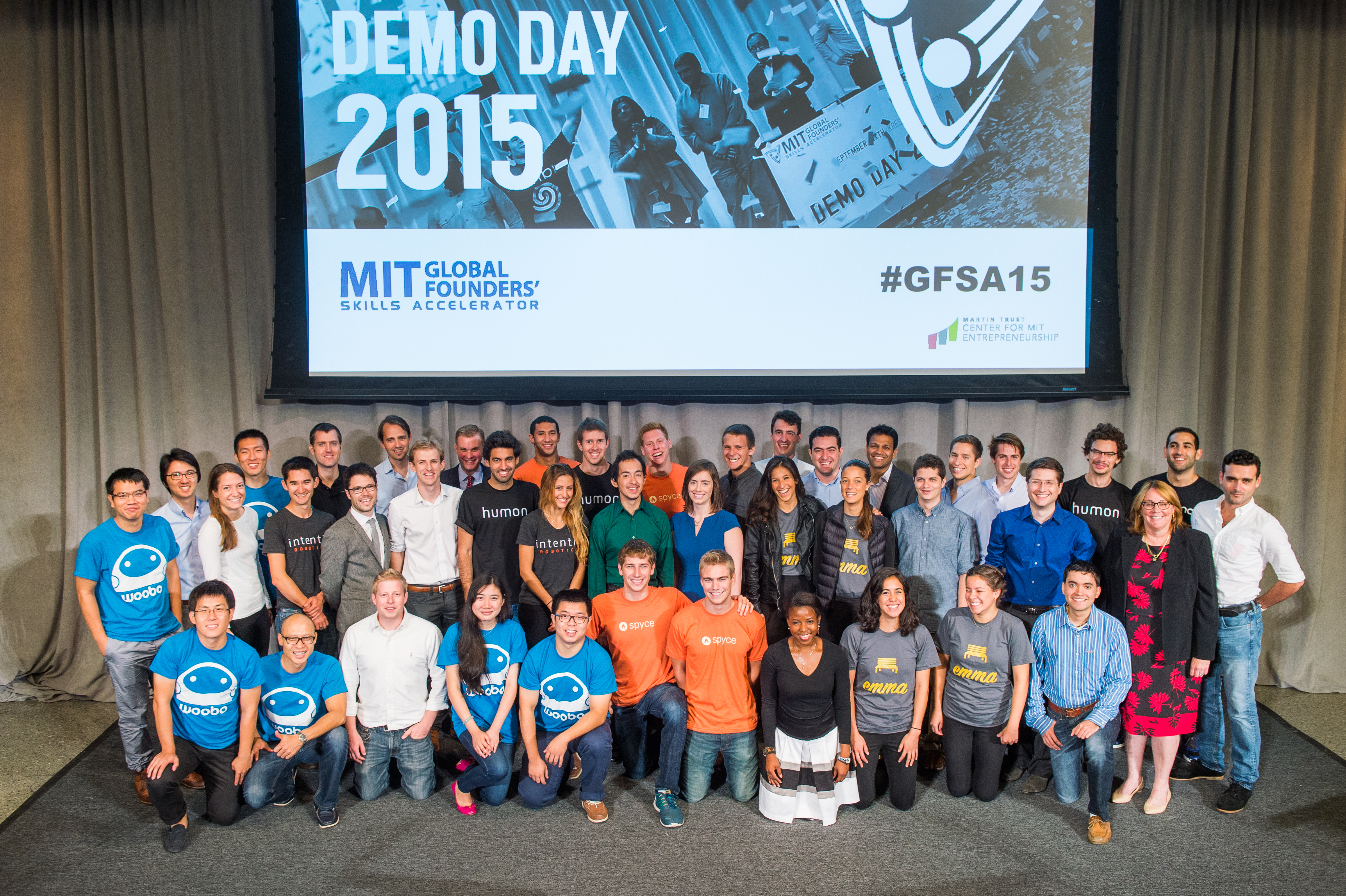
MIT Demo Day 2015 - Boston

MIT Global Founders’ Skills Accelerator (GFSA) student entrepreneur teams
and their advisors at Demo Day 2015 in Boston

What an exciting few weeks it has been! Starting at the MIT campus on September 12, MIT’s Global Founders’ Skill Accelerator (GFSA) has recently completed outstanding presentations to over 1,200 attendees at Demo Days in Boston, New York City, and San Francisco.

Fourteen teams started with the accelerator at the beginning of summer – my first summer as GFSA program director and Entrepreneur in Residence. Twelve teams made it through the summer boot camp, yet the experiences of the two that didn’t make it to Demo Day are as important as the 12 that did. The lessons of leadership and commitment – along with knowing when to pull a plug on a business or pivot when the business doesn’t align with your goals – are key lessons for entrepreneurs.

The teams that came into the boot camp were students as undergraduates, Masters students, and Ph.D. students. Many graduated from MIT in June after the Accelerator program started, savoring their accomplishments for just a day or two before jumping back into the demands of an educational accelerator boot camp. Directing this program for the first time, I observed a very ambitious group that was also very aligned with the MIT community culture, which supports the teams through its educational process and ecosystem.

Life in Entrepreneur Boot Camp

The boot camp curriculum was mixed with faculty from MIT and community practitioners that offered the students the fundamentals and the application of concepts that are key to building a company, understanding your customer, creating a product customers will purchase, having a team that is committed and understands the vision, as well as understanding business and investment fundamentals. The boot camp puts a heavy emphasis on learning about the motivations and needs of every participant in the value chain you want to enter.

The focus on the customer and primary market research for many of the teams was a challenge. I came into the program with the belief that MIT students can solve any technical problem and that was validated. However, I did see many students challenged when it came to listening to customers, iterating on their product based upon that feedback, and communicating to investors, other students and the community about their company.

Can the MIT accelerator experience be replicated? I am sure it can, but MIT is helped immensely by its culture and its ecosystem. The MIT culture one of creativity, supported by an ecosystem that puts an instructional focus on user-focused business and product design. It is a culture that supports entrepreneurial activities at every stage of the journey.

2015 MIT Global Founders’ Skill Accelerator Companies

Here are the 12 outstanding startups that presented on Demo Day. If you are interested in learning more, their website or contact information is included. At this stage, many of the companies are actively looking for advisors, are hiring and several will be fundraising. You can also view the video of the entire Boston Demo Day event here.

Genesis DNA is developing a next-generation gene synthesis technology that can synthesize gene length DNA at a fraction of the price and turnaround time of existing services. (Genesisdna.com)

Humon is building a wearable which non-invasively measures the way athletes’ muscles use oxygen in real time, identifying their lactic acid threshold and unlocking their true potential. (Humon.io)

Intentiv Robotics is creating the first Aerial Control System for drone cinematography, giving videographers full manual control of their aerial camera and allowing them to execute complex aerial shots intuitively. (Intentiv.io)

Khethworks makes reliable, solar-powered irrigation systems designed for small-acreage farmers that enable their customers to cultivate year round and already has multiple pilot sites on the ground in east India. (Khethworks.com)

Lumio is building a digital health companion, powered by their revolutionary device that provides clinical-grade diagnostics in the home in hours instead of weeks. (Email info@lumiohealth.com)

Morphlab is a company that is focused on furniture with superpowers. The team is creating scalable technologies that enable reconfiguration of interior spaces that dramatically increase efficiency, affordability and functionality of urban micro-apartments. (Morphlab.com)

Sandymount has proprietary tools to ship natively brewed beers internationally while maintaining the flavor and experience they would have in their region of origin in a cost effective manner. (SandymountTechnologies.com)

Spyce is developing the world’s first completely automatic restaurant. A Spyce kitchen cooks and serves delicious meals from fresh ingredients with no human involvement. (spyce.io)

Tekuma connects artists with Airbnb hosts to create personalized galleries in shared living spaces. At the nexus of art, hospitality and real estate they can enhance exposure, environments and guest experience. (tekuma.io)

Woobo opens the world of imagination, fun and knowledge to children, bringing the magic of a robot companion to their lives. A plush doll with artificial intelligence capabilities, Woobo gives children infinite access to stories, music, and knowledge, which are developmentally appropriate and will help them grow. (woobo.io)

In addition to the MIT-led teams there were two international teams:

Emma from ITAM in Mexico City is a company that provides companionship and mobility assistance for the elderly generation. It connects decision makers, their son or daughter, with a companion that best fits their love one’s needs. (miemma.com)

VSParticle from TU Delft in the Netherlands is revolutionizing how electronics are manufactured. The company core technology enables them to fundamentally change the current production system, replacing the wasteful etching process by a simple printing process. (vsparticle.com)

Again, all the best to the spectacular start-ups that worked so hard this summer!

Preparing Today’s Students: Notes from the 2015 T-Summit

what-is-tHow can industry, universities and students work together to address the business analytics skills gap?

I was fortunate to speak on this topic at the 2015 T-Summit at Michigan State University in March.

Demand for business analytics skills has increased sharply in just the past few years, with the rise of powerful analytics tools and Big Data. Companies today need business analytics skill sets at every level and in every department. Organizational demand for people with business analytics skills is increasing, while at the same time, more people are leaving jobs than coming in – and that’s a problem.

While companies look to universities to increase their pools of analytical staff, business leaders consistently report that there is a yawning gap between the skills that are required and the training that most academic institutions provide.

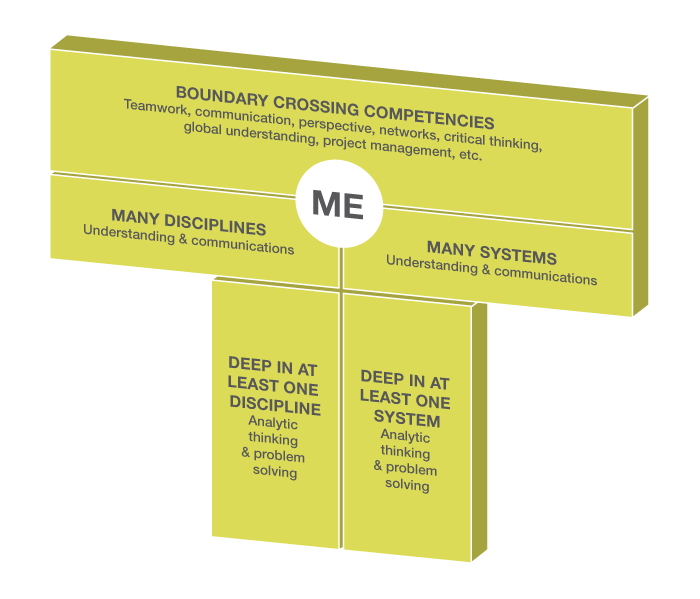
Currently, higher education is producing I-shaped graduates, or students with deep disciplinary knowledge. As I’ve noted before, T-shaped professionals are characterized by their deep disciplinary knowledge in at least one area, an understanding of systems, and their ability to function as “adaptive innovators” and cross the boundaries between disciplines.

The defining characteristic of the “T-shaped professional” is the horizontal stroke, which represents their ability to collaborate across a variety of different disciplines. To contribute to a creative and innovative process, one has to fully engage in a wide range of activities within a community that acknowledges their expertise in a particular craft or discipline and share information competently with those who are not experts.

Responsibility for training graduates is often mistakenly seen as belonging to universities. But businesses are in an essential training role through internships, mentoring, and on-the-job training. Likewise, businesses need candidates with more than just a degree, but who are actually qualified for the positions they are seeking to fill.

Research I’ve done through interviews with corporate executives suggests several key ways to improve:

– Encourage strong and collaborative partnerships between universities, placement offices and businesses. Course offerings should foster the T-shaped skills that hiring organizations demand.

– Create, support and manage robust internship and mentoring programs that include students in curriculum planning and emphasize the enhancement of T-shaped thinking.

These suggested improvements can help corporations and universities to become better partners in providing students with most effective training for tomorrow’s workplace.

At this year’s T-Summit, Jeff Selingo, author of “College Unbound,” shared his findings about some of the innovative approaches underway right now to close the skills gap. I highly recommend watching his presentation, which is included below.

Colleges and T-Shaped Training: Build it and They Will Learn?

Though the idea of T-shaped management is gaining traction on American campuses, there are some important roadblocks along the way. Some of those roadblocks are ivy covered. In some ways, the relationship between colleges and major tech corporations is beginning to look a bit like ju jitsu. Ju jitsu, roughly translated, means that when you get pushed, pull, and when you get pulled, push.

fieldofdreamscorn-400In principle, most business colleges clearly want better partnerships with major corporations. Most colleges accept the importance of using business analytics, T-shaping their students, and embrace change when it comes to education, at least in concept. In reality, however, change seems to move at a glacial pace in the halls of higher learning.

In 2011, the president of New York University observed that monumental change in America was something “people love to talk about,” while also referring to universities as islands of stability in that sea of change: “(W)e should not lose sight of the fact that, of the 80 institutions that existed 500 years ago and still do, 75 are universities.”

And while NYU’s president praised university longevity, he also said that academia continued to do some things badly, in the same old way, over and over again. Specifically, he noted universities still hadn’t come to grips with T-shaping their learning: “One thing the proprietary institutions do that is not a good thing is delivering an ‘I-shaped’ education (depth in one area) as opposed to a ‘T-shaped’ education (broad learning, with depth in one area).”

Academic resistance to T-shaped training often seems to be over matters of control, and fears about giving it up. It is true that the enormous potential influence of corporate technology giants, who are donating massive sums of money and expecting nothing less than drastic changes in what universities teach, cannot be overlooked.

The “Gates Effect”

While Bill and Melinda Gates are not the only major influence on university reforms, they are big enough to have a gravitational effect. In the context of their almost $500 million in donations to universities, this is to be expected. In a July, 2013 article, The Chronicle of Higher Education (which has also received Gates Foundation support) noted that the bulk of these donations (over $300 million) have come in since 2008. That’s a lot of money. And a lot of influence.

One example of how the Gates Effect is transforming the future of college education is seen in a sprawling ConAgra plant in Troy, Ohio. Employees there are participating in an Gates-funded program that awards college credits — not for conventional course work — but for mastering “core competencies.”

Working through the University of Southern New Hampshire and taking online course work, students are assessed in such areas as “logic, reasoning, and analysis,” which help the student solve real-world business problems.

Everyone seems to like the potential of this approach: except for entrenched college executives.

“Build it and they will learn”

In the movie Field of Dreams, the apparently crazy idea of turning a cornfield into a baseball field is justified based on the mantra, “Build it, and they will come.” The threat to American competitiveness, in terms of highly desirable T-shaped employee skills, is that there is a whole lot of T-building going on — elsewhere in the world. Until recently, Poland’s national education system was widely perceived as falling apart, regarded as suitable only for low-trained, low-tech, and low-paying jobs. This view changed with the successful adoption of innovative T-shaped education strategies there.

Interestingly enough, critics of the Gates approach have claimed the Gates Foundation is approaching the “problem” as something that “engineering” can measure (through technical algorithms) and fix . Yet the Gates Foundation seems to be hewing very closely to the Polish model of making T-shaped students. We know through example that it works. Confusing the necessity for a better, T-shaped core curriculum with the need to accurately measure that curriculum is confusing cause and effect.

The lesson for America from Poland is the benefit of every college developing a core curriculum that leverages that specific institution’s unique offerings in such a way to develop T-shaped skills. The shift from a traditional, “I” shaped curriculum to a T-shaped one is very much in evidence in what the Gates Foundation has done with the Southern University of New Hampshire. Whether crossing that “I” to get a “T” will happen in the next decade or not may rest on the influence of a new era of outside-the-box, dotcom entrepreneurs. Will it be enough for the U.S. to compete globally? Or will it be too little, too late? We shall see.