

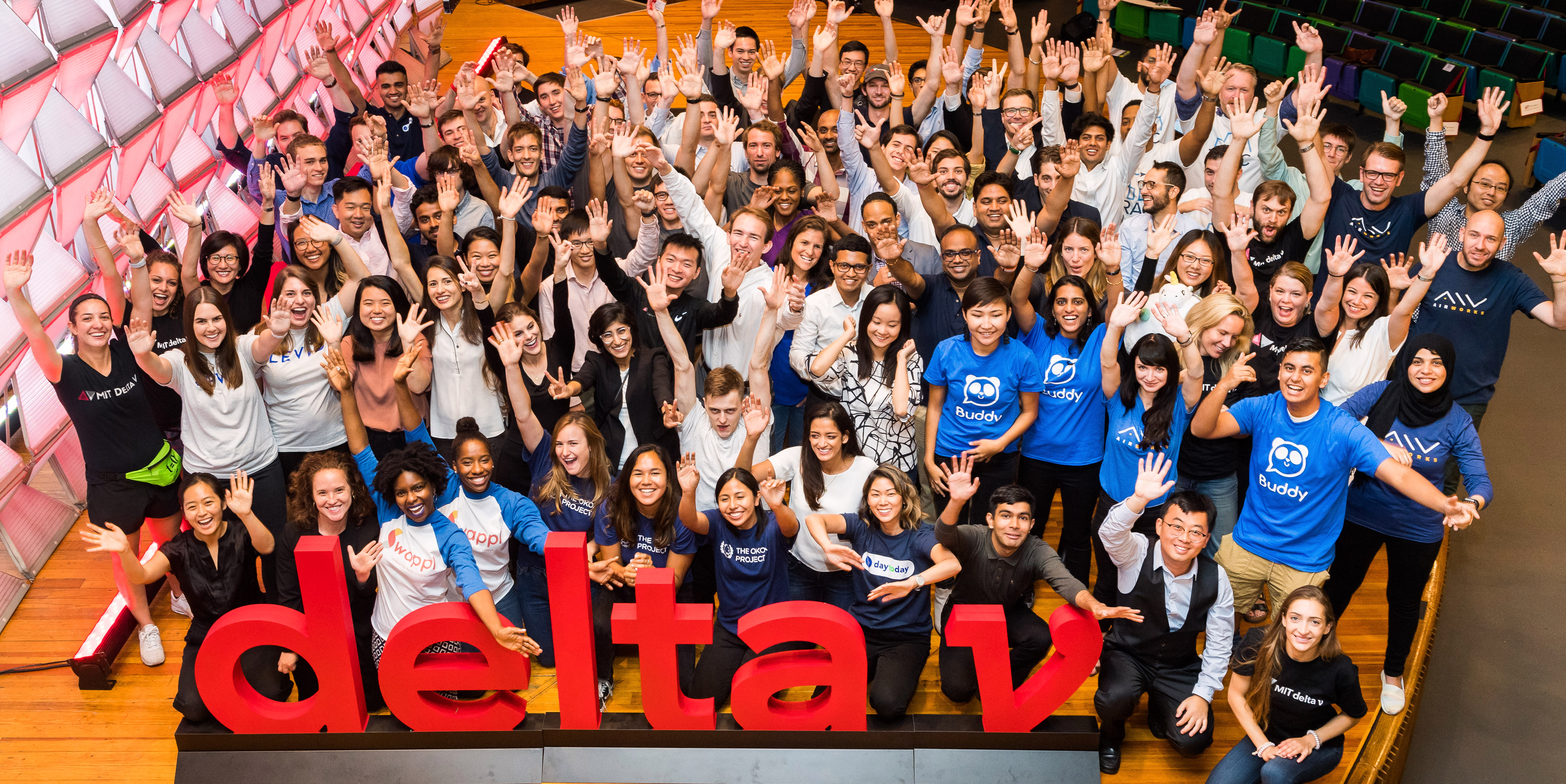
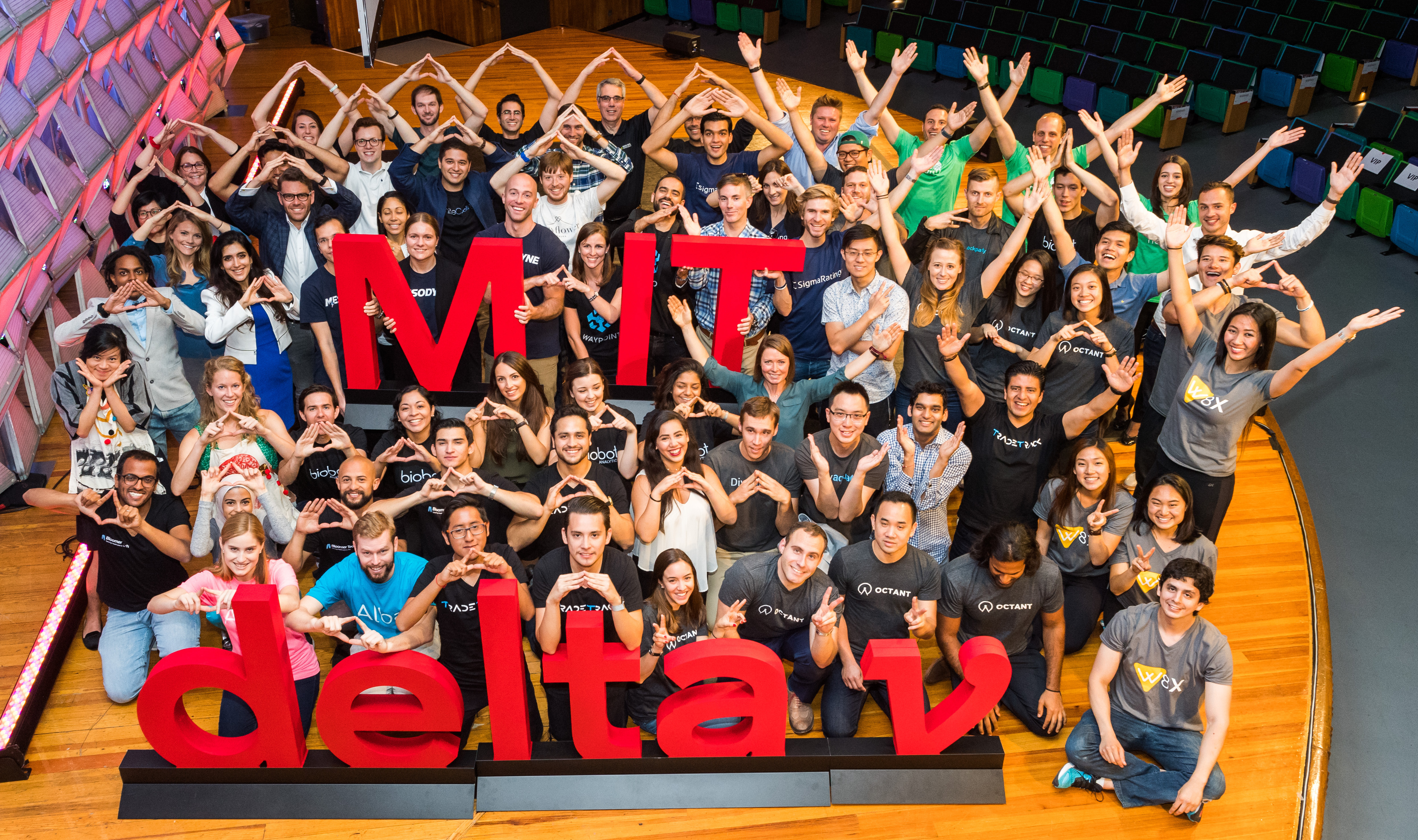
At MIT, the delta v accelerator is our capstone entrepreneurial experience for students. As educators, we always want to know what students gained from our programs and how it helped them in their post-MIT life. We recently interviewed delta v alumni to understand how their entrepreneurship education has had an impact on their life, and we wanted to share the findings.
We reached out to over 400 delta v alums from 2012-2019 with 60 responses.
87% Consider Entrepreneurial Skills a Core Competency
Slightly more than four out of five survey respondents currently consider themselves entrepreneurs. However, the vast majority of alumni (87%) view entrepreneurial skills as a core competency by 87% of respondents – rather than just a means to start their own business. These people may be creating their own ventures now, but they may transition throughout their careers between entrepreneurship and other roles. It’s important that these entrepreneurial skills will support them in either situation.
Respondents consider who consider entrepreneurship a core competency credit both the MIT program as well as the importance of hands-on experience to develop their entrepreneurial skillset. Many also noted they view entrepreneurship as a set of skills that must be honed through practice.
Entrepreneurship is Seen as an Important Part of People’s Identity
Many alumni view entrepreneurship as a way to solve important problems and pursue their visions. Entrepreneurship is the lens through which they approach these challenges and visions, with 62% of respondents reporting that an entrepreneurial outlook is an important part of their identity.
However, a select few respondents see entrepreneurship as a strict occupation, and not a core part of their identity. Others described themselves as entrepreneurs within their specific field or company, for example, an “entrepreneurial scientist.”
92% Say MIT Entrepreneurship Classes Support their Current Role

The classwork that delta v alumni participated in has proven to be on target. A full 92% of respondents either strongly agreed or agreed that what they learned in MIT entrepreneurship classes supports their current role, even if they are not an entrepreneur today.
Specifically, delta v alumni said the skills learned in the classroom help them in the following situations:
- It gave me a playbook when I have to do things I have not done before.
- I use what I learned at MIT every single day, in working with my team, financial planning/strategy, product development and management, and making sure I am looking at the right problems, in various different ways.
- I focus a lot on management – and classes in particular help understand people and teams.
- I need to assess new technologies according to their business promise and their technical risks.
- I can more effectively voice my concerns and disagreements.
- I can think about problems from a variety of different angles – rather than just technically.
- The classwork provided a structured approach to innovation.
- The presentation skills and network taught in delta v are still used to this day.
Entrepreneurial Skills are Marketable
Respondents feel that the entrepreneurial skills they learned while at MIT are marketable with 79% strongly agreeing or agreeing with that statement. They feel that:
- The skills are an asset in their current role (86%)
- The skills will be an asset in their future roles (68%)
- The skills will help them in landing a future job (37%)
Some of the general entrepreneurial skills respondents bring to the table include customer identification/market research, Identifying competitive positioning and use cases, product design, business modeling, and scaling a business.
MIT’s entrepreneurship courses benefit participants by providing frameworks, structure, and discipline to their ideas. It also gave them opportunities to test out ideas and take risks, iterating those ideas in a supportive and knowledge-based environment. Many respondents mentioned the supportive delta v ecosystem and cohort, providing mentors in the entrepreneurship community and a network that gave the entrepreneurs confidence.
One of the delta v alumni sums it up nicely, saying:
“delta v gives people the opportunity to create transformational value in society. It gives young people the tools and skills they need to make that happen. The future rests on the next wave of entrepreneurs to bring about that change and growth.”



 The Martin Trust Center for MIT Entrepreneurship continuously finds new ways to encourage, advise, and champion aspiring entrepreneurs as they take new ventures from idea to reality. The Center’s goals are high, as are its needs; it provides the most innovative opportunities for learning and expands MIT’s global entrepreneurship ecosystem, but it depends on the support of philanthropic partners.
 were always a willing set of mentors who helped me at critical points – for this, I am very thankful. At MIT, we teach a
  Another
  I heard a statistic the other day that 70% of people admit to feeling like an impostor at some point in their lives.* I work with students at MIT – one of the most prestigious universities in the world – and although it attracts the best and the brightest, college students at institutions like this are even more prone to suffering from insecurity.
 On June 12, we’ll open the doors to this summer’s
 which focused on deep tech and what governments, universities, entrepreneurs, and corporations are doing to speed research from R&D labs to make a real impact on society. I was fortunate enough to spend time with entrepreneurs, potential entrepreneurs, and those supporting entrepreneurship in the Nordics, and the experience taught me quite a lot – including not to filter my view of entrepreneurship with a US-centric lens.
 worker also receives free health insurance in a system that produces longer life expectancy and lower infant mortality rates than in America. At age 67, workers get a government pension of up to 66 percent of their working income.
 make necessary investments for the future, we have a strong growth of entrepreneurial focus and companies. This is all about how we prioritize, reposition investments, build competence, and have the guts to make important, and maybe radical, political decisions today to secure tomorrow.”
 Trish Cotter