
Recently, I spent time in Zurich, Munich and Milan meeting with MIT alumni, in the hopes of gaining philanthropic support for the programs run by the Martin Trust Center for MIT Entrepreneurship. As I talked with our alumni in these cities, it made me think of the Entrepreneurial Philanthropy practice put forward by lifelong entrepreneur and philanthropist, Naveen Jain. His promise is that philanthropy is at its best when it is founded on entrepreneurial zest and agility.
Naveen Jain states in a Huffington Post article, “True philanthropy requires a disruptive mindset, innovative thinking, and philosophy driven by entrepreneurial insights and creative opportunities. To disrupt the status quo, drive philanthropy at tremendous scale, and develop long-term economic vitality through giving, we must apply the same models for success in our philanthropic endeavors as we do in business.” I could not agree more.
MIT students are fortunate because they are encouraged to work on problems, projects, and ventures that will positively impact the world. During their journey, they are provided support through tailored classes, mentorship, access to Makerspaces, extracurricular programming, and competitions that offer opportunities for the application of learning and assessments. MIT alumni play a significant role in student support whether it is through mentoring, episodic coaching, programmatic support, introductions, or financial support.
 The Martin Trust Center for MIT Entrepreneurship continuously finds new ways to encourage, advise, and champion aspiring entrepreneurs as they take new ventures from idea to reality. The Center’s goals are high, as are its needs; it provides the most innovative opportunities for learning and expands MIT’s global entrepreneurship ecosystem, but it depends on the support of philanthropic partners.
However, as I visited these cities, I had to ask myself – how do you raise funds to sustain entrepreneurship programs in a global environment that does not embrace it as a serious area of study, or in cultures where education is not necessarily the place you would direct your philanthropic funds, or where risk is not rewarded? Although entrepreneurship is part of our culture of innovation here in the States, it is viewed through a different lens in different cultures, as I learned in the Nordics earlier this year.
MIT alums think broadly. The people with whom I spoke on this trip are thinking about how to attract talent, innovate companies, inspire creativity – and they want out-of-the-box ideas for their communities. We had some spirited debates during our discussions as to the benefits of entrepreneurship to their particular ecosystems. The most common misconception was that entrepreneurship is about embracing repeated failure. However, I would argue that at the Trust Center, we try to mentor and guide students so that they are not repeating the failure of others. Our measure of success is that the student learns the skills to start their own businesses and that they self-identify as entrepreneurs. This lets them take risks while they’re here – ahead of the VC stage.
When I started in business out of college, it was a different time. Companies like Honeywell, IBM, HP, etc. all had training programs that cross-trained new graduates. That experience is not as prevalent today, and startups are a great way to get hands-on experience across multiple disciplines. As my expertise moved from engineering to manufacturing to service to sales operations to logistics to senior leadership etc. there  were always a willing set of mentors who helped me at critical points – for this, I am very thankful. At MIT, we teach a Disciplined Entrepreneurship approach – an approach I have seen work in practice. We have over 60 courses that provide the MIT “mens et manus” approach of mind and hand. Like my apprentice programs years ago, MIT offers hands-on programming to help students understand what working in a new business venture is like and teaches skills of finance, legal, marketing, sales, etc. with industry experience in biotech, healthcare, energy, fin-tech, and other industries.
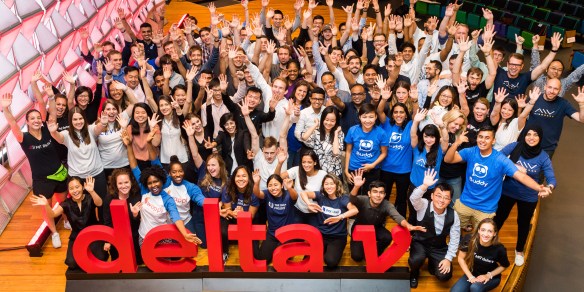
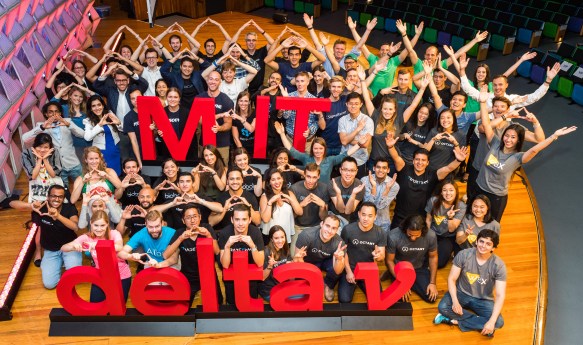
For many of the alumni, these programs did not exist when they were at MIT. However, in speaking with them, they are confident in the educational and hands-on experiences that are available now to MIT students. Several alums said they would love to go back and be a student now. (Wouldn’t we all!?) Although the world is a different place now than even five years ago, the Trust Center keeps abreast of these changes as evidenced by the success of our MIT delta v teams. Our students are the pulse of change in the world.
Supporting an institution like MIT – and centers such as the Martin Trust Center that provide entrepreneurial programming – creates a workforce that has cross-disciplinary experience.
Demand for delta v has grown, while our budget has not increased for the program. We need funds to support these deserving student teams. As our success becomes public, so does the demand for our product, and increased resources enable us to teach others to become entrepreneurs wherever they are located. We cannot do it without a community and the philanthropy that will plant the seeds, so our students can positively impact the world.
 Another
  I heard a statistic the other day that 70% of people admit to feeling like an impostor at some point in their lives.* I work with students at MIT – one of the most prestigious universities in the world – and although it attracts the best and the brightest, college students at institutions like this are even more prone to suffering from insecurity.
 On June 12, we’ll open the doors to this summer’s
 which focused on deep tech and what governments, universities, entrepreneurs, and corporations are doing to speed research from R&D labs to make a real impact on society. I was fortunate enough to spend time with entrepreneurs, potential entrepreneurs, and those supporting entrepreneurship in the Nordics, and the experience taught me quite a lot – including not to filter my view of entrepreneurship with a US-centric lens.
 worker also receives free health insurance in a system that produces longer life expectancy and lower infant mortality rates than in America. At age 67, workers get a government pension of up to 66 percent of their working income.
 make necessary investments for the future, we have a strong growth of entrepreneurial focus and companies. This is all about how we prioritize, reposition investments, build competence, and have the guts to make important, and maybe radical, political decisions today to secure tomorrow.”
 Call it the problem of the middle—the middle states and the middle class—two groups that have struggled with problems that, while they are inexorably linked, are different all the same.
 I have recently been catching up with colleagues from companies past, and when I let them know what I am doing now, I often get the reaction, “Wow! That’s such a cool job.” And it is … I’m fortunate to be the director of
  The organization I worked at most recently, prior to MIT, was IBM – a company that is trying to bring data analytics insights to companies, so they can address real world problems. The complexity of what both our MIT startups and IBM are doing, albeit in different ways, struck me. Are they so different? I have deep respect for IBM’s CEO, Ginni Rometty, who is moving a company the size of a small nation. However, the leaders of the MIT three-person startups are also scaling difficult challenges and placing bets with tremendous odds of failure.
 Is MIT any different than a corporation? The complexities of a university rival corporations, but the opportunity to be immersed in new technology brings me back to my days at Honeywell. Working with our startup teams, I feel like a first year engineer every day. The
  Trish Cotter