From Caps and Gowns to Startups: The Rising Trend of New Grads Choosing Entrepreneurship

We’re in the midst of graduation season—a time of excitement and anticipation as students leave behind the classroom and start to shape their futures. One trend I’m seeing is that new college graduates are investigating options for entrepreneurship directly out of college, before committing to full-time corporate roles.

A recent HBR article confirms what I’ve seen. It cites a Global University Entrepreneurial Spirit Students’ Survey (GUESSS) of 267,000 undergraduate and graduate students that revealed around 11% of students already own and run businesses. At least 18% of students wished to become entrepreneurs right after graduation and another 32% expressed interest in transitioning into entrepreneurship within five years of their graduation. The study also shows that investments in early-stage startups have increased from $72.8 billion in 2017 to $208 billion in 2021.

If you’ve ever had an idea to start your own business, it might be an ideal time to pursue that passion (especially, while you are still used to living on ramen as you work on getting funding!). Consider this period of your life as an opportunity to explore and to see if entrepreneurship is a viable option for you. At a time when there is so much chaos in the world, doing your own thing can give you back control.

This summer, I’ll be teaching at an entrepreneurship program designed by Dalhousie and the University of Calgary called Lab2Market Launch.  This 12-week summer accelerator brings together members of the entrepreneurial ecosystem from across Canada to turn ideas into viable businesses. In the past, I served as the Director of MIT’s delta v accelerator program, another summer program which is the capstone entrepreneurship experience for MIT students – both are excellent programs to help propel entrepreneurs. And along with these formal programs, there are a host of resources for people who want to explore entrepreneurship – check out this post about thriving as an entrepreneur, and see the links at the end.

As new graduates increasingly turn to entrepreneurship, the landscape of post-graduation career choices is rapidly evolving. This trend has been bolstered by a combination of technological advancements, changing economic conditions, and a growing desire for personal fulfillment and flexibility in career paths. Many prospective entrepreneurs are driven by the appeal of launching startups that align with their passions and the promise of greater autonomy compared to traditional corporate jobs.

Entrepreneurship Advice for New Graduates

For new graduates, exploring entrepreneurship offers several advantages. It provides a hands-on learning experience that can be more dynamic and varied than the structured environment of a corporate job. Starting a business can also foster critical skills such as resilience, problem-solving, and leadership.

However, it is crucial to recognize the challenges, particularly in securing funding. To gain an overview of the types of funding available, check out this article on 8 sources of start-up financing. Traditional funding avenues might be less accessible for entrepreneurs who are just starting out, prompting graduates to explore alternative sources like crowdfunding, government grants, incubator, and startup accelerator programs.

Members of Forbes’ Young Entrepreneur Council, also share their experiences and some solid advice in this Forbes article, including:

  • Create a business plan
  • Hustle and network in order to succeed
  • Picture your business like a workhorse
  • Listen to what your customers need
  • Focus on a niche market
  • Talk to those who have done it
  • Ask how you can help
  • Think long term
  • Ditch perfectionism
  • Invest in yourself

Not surprisingly, several of these pieces of advice align with the 24-steps to a successful startup that we teach at MIT with the Disciplined Entrepreneurship approach (you can read a short overview here), or check out the newly updated Disciplined Entrepreneurship book and the new Startup Tactics book by MIT’s Bill Aulet and Paul Cheek.

Impact of Mentors, Coaches, and Educators on Entrepreneurs

One thing I would stress is to make sure that you establish a strong connection with a mentor or coach – someone who can help keep you on track and provide support and guidance during your entrepreneurial journey. Established entrepreneurs can play a pivotal role by mentoring new graduates, offering insights and resources to navigate the complexities of starting a business. Coaches can help inspire you to achieve peak performance. As a certified Energy Leadership coach, I coach entrepreneurs on how they can harness their own unique energy and become a better leader. Having that mentor or coach who is separate from the day-to-day workings of your startup is a wonderful way to gain perspective as an entrepreneur.

In addition – for those who are still in school – educators are increasingly adapting their curricula to emphasize entrepreneurial skills, such as innovation, digital literacy, and strategic thinking. Incorporating real-world projects and case studies can bridge the gap between theoretical knowledge and practical application, better preparing students for entrepreneurial endeavors. Today, there are more than 5,000 entrepreneurship courses are offered in two-year and four-year institutions, according to the Kauffman Foundation, and more than 150 institutions in the U.S. allow students to major in entrepreneurship, according to Best Colleges. This is more than triple the number from two decades ago.

My Perspective

As someone deeply embedded in the entrepreneurial ecosystem, I see this shift towards entrepreneurship as an immediate path after graduation as both a challenge and an opportunity. The influx of young, innovative minds into entrepreneurship can drive significant advancements across various industries. However, it is vital to provide the right support systems to ensure their success. Mentorship programs, comprehensive entrepreneurship education, and access to diverse funding options are essential components of this support.

Moreover, fostering a mindset that embraces failure as a learning opportunity is crucial. New graduates should be encouraged to take calculated risks, understanding that setbacks are part of the entrepreneurial journey. This perspective not only builds resilience but also fosters a culture of continuous improvement and innovation.

Conclusion

The trend of new graduates exploring entrepreneurship before starting corporate jobs may signify a shift in career trajectories and workplace dynamics. By supporting these budding entrepreneurs through mentorship and coaching, education, and access to resources, we can harness their potential to drive innovation and economic growth. As educators, entrepreneurs, and thought leaders, it is our responsibility to guide and nurture this new generation, helping them navigate the challenges and seize the opportunities that lie ahead.

If you are interested in learning more about coaching sessions for entrepreneurs, please reach out at patriciacotter76@gmail.com.

An Inside View: MIT’s Intense, Week-long Entrepreneurship Development Program

MIT beaver mascot

#MITEDP … IYKYK

OK, enough with the acronyms! But MIT’s Entrepreneurship Development Program (EDP) is one of those experiences that has that aura of “if you know, you know.”

It’s a week-long intensive entrepreneurship program run by MIT Sloan Executive Education, and this year MIT EDP included 76 participants representing 19 countries and 6 continents – and the individuals who attend become raving fans. This program is designed for aspiring entrepreneurs, corporate venture officers, startups, and those who would like to develop or strengthen a climate of entrepreneurship in their corporations, universities, and regions.

The entrepreneurial spirit runs high during the week. The days (and nights) are long as the teams of five to eight people create a tight bond while working together to create, identify, and evaluate new venture opportunities. Participants regularly describe MIT EDP as inspiring, enlightening, and even life changing. Here are a few comments posted on LinkedIn by this year’s attendees:

  • “An intense deep-dive into disciplined entrepreneurship and venture creation … Lots (!) of pivots, iterations and learnings from our primary market research led us to pitching a SaaS company focused on maximising athlete performance – not the idea we started with and far removed from my biotech day job, but I loved it! Lots of laughs along the way made for a great team spirit and an unforgettable experience. Now time to take the MIT mindset, energy and everything I’ve learned and apply it to mycoBiologics.”
    Fiona Rudkin, mycoBiologics Co-Founder and Managing Director
  • “I am honoured to return to MIT Sloan Executive Education alongside a cohort of ambitious entrepreneurs and founders on a mission to improve the world by accelerating high-growth businesses and creating high-skill jobs for the future.”
    Luis Ibarra, Founder & CEO at eCERTO

  • “When we arrived on day one, we were promised ‘the real thing.’ I nodded politely; it sounded an incredibly American thing to say. Having experienced it however, there’s something quite indescribable about being there … You talk about energy amplification, my Scottish friends will think I’ve gone all American on them, but I struggle to think of a better way of describing it.”
    Andrew Smith, Technical Director, distilling and cask management

  • “Let’s have an impact and solve the big world’s problems through entrepreneurship. Creativity is contagious! The world needs entrepreneurship!”
    David Desplaces, Director, VTLI at The Citadel

This year, my role at MIT EDP was as one of the judges, viewing the program from a different perspective than I have in the past. For three years, I was an instructor and facilitator for the Entrepreneurship Development Program, and it was always refreshing to work with seasoned professionals who are used to delivering results and can bring their life experiences to this program. (Here’s my post from 2020 which discusses some of the details of MIT EDP and its impact.)

My view as a judge was a bit different. Usually, I am involved in sausage making, this time, I was in a position to see how the finished sausage turned out. To take the analogy further, as a connoisseur versus a chef, I appreciated the outcomes of the continual learning process even more.

My perspective as an MIT EDP judge was framed by my own recent entrepreneurial experience. For the past year, I have been running a coaching business focused on energy leadership coaching. Although my prior experience includes navigating two startups through to IPOs, teaching Eship classes at MIT, and serving as director of delta v (MIT’s capstone program for entrepreneurship), applying the lessons of MIT EDP to your own business brings it all into sharp focus.

This time, I pressed a bit deeper to see how the teams thought about their businesses. If they were going to start with an idea, did they apply the key concepts of Disciplined Entrepreneurship to that idea? For example: Who are the first 10 beachhead customers you are going to target? Have you considered the burdened salaries of the team of engineers you are planning to hire? Does this technical solution deliver enough added value for customers over existing approaches to solve the problem?

In the course, the process of learning a concept, applying it, and reinforcing it through coaching is designed to simulate the experience of a startup company seeking funding. As participants are taught in the course, the judges want to understand the assumptions the groups made, and these teams were well prepared by the end of the week. A key concept that I use in energy coaching is “how you show up matters,” and these teams showed up with their best energy.

The final day of MIT EDP culminates in a competition that reflects the MIT “mens et manus” (mind and hand) approach to learning by providing both the theory and reinforcing it with the practical. Ideas in the competition ranged from Urgent Care AI to creating a plug for casks to monitor volume – the ideas were terrific, as was the demonstration in applying the concepts. A dozen teams competed with a 10-minute pitch and a 10-minute Q&A session in the first round. This was then narrowed down to four finalists. I’m not going to call out the winner here, because the stakes aren’t high, and I truly believe that winning is in learning and applying the process with a team you met less than a week before. (But, the lucky winners did get autographed galley copies of new entrepreneurship books from Paul Cheek and Bill Aulet.)

The MIT EDP program fosters entrepreneurial skills and an entrepreneurial mindset among participants, but the lessons apply across the board. Corporate leaders often need to be immersed in an experience where you are learning and applying new ideas in a team with people you just met. The EDP experience made me think of how this intense, immersive type of experience would be ideal for onboarding new employees, helping teams to gel faster, and accepting newer players and their ideas.

So, whether you had the opportunity to attend MIT EDP or not, I encourage you to take the plunge and be open to new experiences. Create a space where you can identify new opportunities, experience different ways to work, learn new skills, and embrace your passions.

If you’re an entrepreneur or corporate leader, and would like to learn more about how energy leadership coaching can help you to recognize your unique energy and harness it to lead more effectively, please reach out.

I hold coaching certifications from both iPEC and ICF.

What is Disciplined Entrepreneurship? A Short Overview for the Uninitiated.

When I recently presented at the Association of Talent Development’s ATD ’23 conference, our session was focused on how to Think Like an Entrepreneur and Foster Creativity in Your Organization. This was geared to help learning & development (L&D) professionals take lessons from entrepreneurship and apply them to their organizations.

One of the topics that we touched upon was Disciplined Entrepreneurship. The Disciplined Entrepreneurship approach was such an important and ingrained part of the entrepreneurship program at MIT, that I had to step back and realize that this was new information to most of the ATD ’23 attendees. (In fact, I’m currently preparing materials to teach Disciplined Entrepreneurship content via a partnership between MIT and Dalhousie University in Nova Scotia.) 

Since I had a lot of follow up questions on Disciplined Entrepreneurship, I thought I’d give a little more background on the approach and how it works in this blog post. Disciplined Entrepreneurship – or DE as we like to call it – is an approach to help you think about how you start to get your product or service to move forward.

This methodology assists the start of an entrepreneurship journey, and Bill Aulet, Managing Director of The Martin Trust Center for MIT Entrepreneurship, has documented this in his Disciplined Entrepreneurship book.  This is a great place to start if you are looking for an accessible and methodical approach to entrepreneurship. (Plus, the illustrations are fantastic!)

Source: Disciplined Entrepreneurship

The focus is that entrepreneurship can be broken down into 24 steps based on six themes. The discipline comes in by following these steps.

Six Major Themes of Entrepreneurship

As you’ll see in the DE map, the themes are color-coded. The six themes are:

  1. Who is your customer?
  2. What can you do for your customer?
  3. How does your customer acquire your product?
  4. How do you make money off your product?
  5. How do you design and test (prototype) your product? and
  6. How do you scale your business?

(This process does not include sales, sales tactics, marketing, raising capital, team building, etc. but if you are thinking about a venture this is a good place to start.)

De-Risking Your Venture

A disciplined approach focuses on de-risking the venture by understanding your customer’s needs and providing value, so they become paying customers. It will help you establish your business and understand how customers are going to find you (along with where you will find your customers). You also need to thoroughly understand how you will make money (renewals, add-ons, etc.).

The book takes you takes you through important steps that are often overlooked – like hypothesis testing and concept validation. It also talks about how you need to focus on designing a prototype or minimum viable product (MVP), as well as how you are going to scale.

People think it is risky to be an entrepreneur. Yet, as discussed in the ATD23 session, an entrepreneur is adaptable and willing to focus on a core group of customers to build the business rather than trying to be everything to everyone.

How do you start?

Start with the first theme—what problem are you solving and for whom? You need to move from concept through qualitative interviews (talk to humans), then quantitative research if required. Find a core group with a message that resonates and a problem you can solve; this is problem research.  

If you start with an open-ended question about what you do on a typical day? Ask open-ended questions (Tell me more? What about that product or service that is going well? What is not? etc.). There is a free e-book online called Talking to Humans by Giff Constable that can help with this. This is a process that continually refines and tests your hypotheses. Your primary market research (PMR) will help you understand your potential customers’ pain points.

Giff also has a book (another short read) called Testing with Humans.  At the end of the problem research, if customers didn’t mention the problem that you are building or providing a solution to, then move on to others, and if you can’t find your core, you may want to revisit your core assumptions.

Once you have a core that has the compelling problem then work with that set to review potential solutions. You then will move to what value they will achieve from your solution so you can gauge purchase intent.  

As you explore entrepreneurship further, make sure you are thinking from a global perspective. My ebook on Startup Accelerator Programs Around the World can help entrepreneurs find accelerator resources, with a focus outside the US.

This blog post presents a quick overview of Disciplined Entrepreneurship that gives a little more information that was possible in my session, but there are many resources for you to delve into further.  For those looking for ideas and ways to potentially introduce entrepreneurship ideas into their corporation, there is a short blog explaining the four models of corporate entrepreneurship and a more in-depth article from MIT on the four models.

More Entrepreneurship Resources

For further reading, viewing, or participation, here are some additional resources on entrepreneurship:

Four Highlights of the ATD’23 Conference

In May, I traveled to San Diego to present at the Association of Talent Development’s ATD ’23 conference which featured over 250 sessions to educate and inspire professionals in the talent development field.

This is a terrific conference for Learning and Development (L&D) leaders to share insights, research, and best practices, and when my colleague Rita B. Allen, and I learned our presentation was accepted for the conference, we were thrilled. (Rita, author of Personal Branding and founder of Rita B. Allen Associates, has presented at the conference before and says only a small percentage of submitted presentations are accepted, so this was music to our ears.)

Our session, titled Think Like an Entrepreneur: Foster Creativity in Your Organization, aimed to help L&D professionals take lessons from entrepreneurship and apply them to their organizations. This is different from the audiences of entrepreneurs I usually present to. With this audience, there is an opportunity to bring some frameworks that might help foster the entrepreneurial mindset in their organizations or unleash their inner entrepreneur. For that, I am grateful for the opportunity.

Since this message is something that we’d like to share more widely, I’ll be writing blog posts on the elements of our presentation, including disciplined entrepreneurship, an antifragile and entrepreneurial mindset, and energy leadership. Before I dive into those topics, however, I’d like to share four highlights of the conference – and positive messages that I walked away with. These are not in any particular order, other than they build on each other. 

Adam Grant

If you’re not already a fan of Adam Grant, he is an organizational psychologist at Wharton, a best-selling author, and the host of the TED podcast WorkLife. If you don’t follow Adam on social media, I suggest you start – his practical advice on work/life balance is a breath of fresh air. Adam hosted the opening general session, titled Think Again: The Power of Knowing What You Don’t Know. He covered a lot of ground, but three things stood out from his keynote:  

  • Invitations into your network should be given to “disagreeable givers” — blunt people who aren’t afraid to tell you hard truths, but who also have your best interests at heart. An example for those familiar with the Ted Lasso TV series is Roy Kent.  
  • “Unlearning” often focuses on making room for new learning. This lets you address things you are doing that are not servicing you or others. Adam explains it takes courage to unlearn. Unlearning requires the integrity to admit that you were wrong yesterday. Learning is how you evolve. Unlearning is how you keep up as the world evolves.
  • As an entrepreneur, Adam also discussed scientific thinking and its impact on startups. Thinking more like a scientist, having the ability to pivot, individuals with the humility and curiosity to search for information all support entrepreneurship success.
Session capture by Lisa Rothstein

Priya Parker 

Facilitator, strategic advisor, and author Priya Parker presented on The Art of Gathering. Priya presented a new – at least new to me – way of thinking about how you hold meetings and gatherings. She spoke about how these gatherings should be intentional and benefit from setting expectations around the goals of the meeting, party, or gathering. The intent in the design is critical to ensure that both the host’s and guests’ experience is as intended. 

This made me think about how I am designing my summer entrepreneurship classes with MIT/Dalhousie with specific learning content. I do focus on the experience for the students, but the classes are much more focused on the content. This talk offered me a fresh look at hosting and attending events from now on, putting some boundaries around what is acceptable. It works best if you are super-specific about the intention of a meeting (or another event) and specify what you intend to accomplish. Priya recommends starting with a strong opening and closing as opposed to covering logistics. 

Session capture by Lisa Rothstein

Katrina Kennedy

Known to the training community as “the trainer’s trainer,” Katrina Kennedy’s session was titled It’s All About Retrieval and discussed the retrieval of information. She explained that retrieval is more than just recall; retrieval is accomplished in a way that you have context for the information. Learning needs to be varied, spaced, and interleaved. The retrieval practice needs to focus on learning. How many times have you re-read material several times and still not been able to recall the information when it is required?

Rita B. Allen, Katrina Kennedy, and Trish Cotter

Retrieval in practice is what we refer to as “use it or lose it.” If you want to play a piece of music and it is difficult to start, the struggle to learn to play it is actually a “desirable difficult” process that helps you solidify the learning. This isn’t about repetition. It is about spacing and breaking up the learning. In the classes I teach, I use breakouts to discuss further and debrief concepts as well as games to reinforce learning. Still, this retrieval discussion brought both the unlearning and learning of new ways of teaching and the intention to gather for a class together. The most memorable experiences will be those in which you have “desirable difficulty.”

University of Pennsylvania Chief Learning Officer Ed.D. Program

One personal highlight at the conference was the scholarly presentations of University of Pennsylvania Chief Learning Officer (CLO) doctorate graduates. I graduated from this program with an M.Ed. ’13 and Ed.D. ’14 and couldn’t be prouder! I wanted to give a shout out to these amazing presentations by my fellow Penn CLO grads:

  • Dr. Carol Henry (Implications for Practice: Behaviors and Competencies for Future Leadership Development Programs)
  • Dr. Jennifer Neumaier presented her dissertation: A Perspective Study on Cultural Conditions That Enable Social Learning.
  • Dr. Kandi Wiens, is a Senior Fellow and runs the master’s portion of the program at Penn, also presented the Ed.D. program and her research which will be out in her book due out next year, Burnout Immunity: How Emotional Intelligence Can Help You Build Resilience and Heal Your Relationship with Work. (Read her recent HBR article on Has Cynicism Infected Your Organization?)

If there was any concern that COVID slowed down the Penn CLO program, it was clear that this was not the case! Applications are up, the strength of diverse cohorts was showcased, and the quality of the research adding to the field of Learning and Development and other areas was on display at ATD ‘23.

In closing, post-COVID travel to a conference can often feel tougher than before, yet the amazing and energized professionals I met, and the concepts discussed at gatherings like this were worth the effort and can unexpectedly warm your heart.

On to the Next Chapter …

Moving on from MIT

Have you ever finished a riveting book and realized that the plot, characters, and setting have left an indelible mark on your being? That is how I will always remember the Martin Trust Center for MIT Entrepreneurship – the people, energy, and ideas will forever imprint the fabric of my life.

When I joined the Trust Center nearly six years ago, I blogged about Disciplined Entrepreneurship – the framework we use for the entrepreneurship program at MIT’s Trust Center based on the book by Bill Aulet, the Center’s Managing Director. One of the ideas that resonated with me then, and continues to do so, is that “ideas mean nothing without execution.”

Reflecting on the past six years, I realize that my time at MIT was about more than a job, it was about the execution of entrepreneurship. It was a chance to shape the lives of aspiring entrepreneurs who had big dreams and ideas to change the world for the better and help them to shape and execute those ideas into concrete plans. At the Trust Center, we like to say that MIT’s student entrepreneurs tackle the world’s big problems, and it was exciting to help make that happen.

Here’s the synopsis of how I landed at the Trust Center, and filled many roles, ultimately becoming the Director of MIT delta v, as well as an Entrepreneur-in-Residence and a lecturer at the MIT Sloan School of Management on entrepreneurship topics.

In 2014, I had completed my doctorate in work-based learning at the University of Pennsylvania’s Chief Learning Officer program, and I wasn’t sure what my next step should be. I had the option to get back into the corporate world and focus on business analytics, but instead decided to pursue a role in education. I was hired by MIT as an Entrepreneur-in-Residence and to help lead the student venture accelerator program, which is now known as delta v. From there, my role has expanded to teaching entrepreneurship classes, spearheading global programs, and becoming a spokesperson and thought leader representing MIT’s entrepreneurship initiatives.

This was definitely something new and different for me, and I had to push myself out of my comfort zone and embrace the challenge. The results achieved have certainly been beyond what I could have anticipated six years ago, including the expansion of the Trust Center – both physically and via online with Orbit, growing delta v both in size and in scope, partnerships with other universities, and instituting a flagship program to support the mental health of entrepreneurs. There were also many awards and accolades along the way, both personally and for the program.

But I’m not here to toot my own horn … I want to sincerely thank the whole team at the Trust Center for their support, teamwork, and camaraderie over the years – our group is quite the entrepreneurial talent tree. I’d also like to thank all the students who I was able to work with and mentor on their entrepreneurial journeys. Your enthusiasm and bright light made the hard parts of this job rewarding and worthwhile.

For those of you who are rethinking your own career situation, after the past year this may be exactly the right time to open yourself up to new experiences and find that that your next chapter was better than your last. I am leaving a job I love for the unknown – of course, this is a risk, but as an entrepreneur you bet on yourself, and make the choice to wake up with a “wow” in terms of what is going to happen today.

For me, this is the time to move beyond what has become well-loved and comfortable, and to take a leap into the next chapter – the fourth in my career. First, I was an engineer who moved up through the executive ranks. Second, I focused on startups, leading two companies to successful exits. Third, was my move into academia at MIT by leveraging my startup experience. And, for the fourth chapter, I’m not 100% sure what it will be yet, but stay tuned – that is the exciting part!

As Entrepreneurs-in-Residence Rotate, MIT’s Talent Tree Grows

At MIT, entrepreneurship programs run wide and deep – but across the board, student entrepreneurs know they can count on the university’s Entrepreneurs-in-Residence (EIRs) for their wisdom, experience, and advice.

We caught up with some former EIRs who have represented the Martin Trust Center for MIT Entrepreneurship. They have been part of a rotational program spearheaded by Bill Aulet, the Center’s Managing Director. The concept of rotating experienced entrepreneurs through the Trust Center has been extremely successful – it gives students a sounding board for their questions and benefits the EIRs as well, enabling them to recharge and rejuvenate before their next venture.

Aulet likes to call the network of EIRs part of MIT’s Entrepreneurial Talent Tree. Many of these individuals have roots at MIT – they went into the world to become entrepreneurs, then touched back down at MIT as EIRs prior to moving on to do big things as entrepreneurs again, or in the entrepreneurial education community. Through this talent tree, the lessons and skills of MIT’s entrepreneurship program are widely shared, and a strong network is formed.

Elaine Chen, a former EIR who has recently been appointed as the Director of the  Tufts Entrepreneurship Center (TEC) and the Cummings Family Professor of the Practice in Entrepreneurship, sums up the MIT EIR experience as an opportunity to give back to the entrepreneurial community by helping them learn. “We draw on our own experiences to help students acquire an entrepreneurial mindset and skillset, which will help them succeed wherever they go in their careers.”

“We try to give entrepreneurs a safe, unbiased set of feedback,” comments Dip Patel, now CTO of Soluna. “In the entrepreneurship game, it’s very hard to get unbiased feedback. And it’s doubly hard to get unbiased feedback from people who have been operators or founders.”

“It’s better to give than to receive,” adds Will Sanchez, now at Gradient, his fourth startup. “But as MIT EIRs, we certainly receive a lot from the students as well. And we are doing this in a serving way.”

Donna Levin adds, “The EIR role enabled me to help provide students with actionable skills, proven frameworks, and a sense of urgency – what we called moving at founder speed.” Levin has moved on to head up Babson’s entrepreneurship program.

Nick Meyer, now a co-founder of Relativity6, remarks on the bond between the EIR group at the Trust Center. “Everyone’s always trying to help each other out and make introductions, and we still talk all the time.”

Introducing MIT EIRs: What they’re doing Now

As a brief introduction, here’s a quick snapshot of the former EIRs interviewed for this article and what they are doing now. Each EIR explains what they felt they were able to share with the student entrepreneurs, and what they received in return.

Elaine Chen continues to expand entrepreneurial education in the Boston area as the Director of the Tufts Entrepreneurship Center and the Cummings Family Professor of the Practice in Entrepreneurship, following her nine years at MIT as an EIR and Senior Lecturer. Chen will work with students in all majors – including liberal arts, medical, dental, etc. Building on her MIT experience, this was a fantastic career opportunity and Chen looks forward to the year ahead.

Another former MIT EIR, Donna Levin, heads up Babson’s Arthur M. Blank School for Entrepreneurial Leadership as CEO. While Chen and Levin are cultivating entrepreneurship in educational leadership roles, other EIRs have gone on to start their next venture.

Nick Meyer is now a co-founder and Chief Product Officer of Relativity6, a company that uses AI to increase customer retention and lifetime value, currently focusing on the insurance broker industry. Key to Relativity6’s success is how to be predictive, without using personal information. The company looks at patterns developing over the course of people’s lives.

Will Sanchez is now The VP of Business and Customer Development and a founding advisor at Gradient, a cybersecurity company that is working to reimagine digital trust from the very beginning. The 14-person, Boston-based startup is still very much in the jungle stage – no paved roads – and he’s learning tons of new things to satisfy his infinite curiosity.

Dip Patel, is now the CTO at Soluna, a company launched in 2018 that is building a new type of data center that combines with renewable power plants – grid operators can plug into and turn on and off whenever they want. The company’s mission is to make renewable energy the primary power source, using computing as a catalyst.

Giving to, and Gaining from, MIT’s Student Entrepreneurs

It’s evident that this is a smart and talented group. We are fortunate each of them shared their time and talents with the student entrepreneurs at MIT. Here’s how they felt they gave back to the entrepreneurship community, and what they gained in return.

Elaine Chen comments she was known as a “hardware person” at the Trust Center and was able to leverage her background at Rethink Robotics, Zeemote, SensAble Technologies, and other hardware-related startups, to help guide students with startups in that sector. She feels that she was able to share her experience having seen a lot of different scenarios and give students a dose of reality.

Working with the students, she learned a lot about different businesses – from bitcoin to chip design – because they researched it and learned it together. She also worked with current EIR Paul Cheek as product manager for MIT Orbit, and helped build up the knowledge base with over 600 unique articles for entrepreneurs.

Donna Levin explains, “We were able to create a safe environment and meet students wherever they were on their entrepreneurial journey. From ideation, market selection, to product market fit – early stage entrepreneurs craved the ability to have a conversation about the problem they were trying to tackle today or this week.”

She was constantly inspired by the societal problems the students are tackling in the world and learning about new technology and scientific discoveries. Levin says serving as an EIR was one of the most rewarding experiences of her career.

Nick Meyer believes he helped students navigate the MIT culture and break out of the mental blocks that can come from overthinking things. Many students at MIT have such confidence in their ability to build things, and build things quickly, that they default to building instead of first figuring out what should be built. Meyer was able to aid students by sharing a lot of stories of what’s practical and what has worked at his startups.

In turn, he reports that telling his stories to the students helped him created a narrative of what happened in his career, as opposed to how the startup made him feel. “You can build up this narrative that’s not the healthiest because there aren’t that many levels of success in startups. There is kind of ‘billionaire or bust’ mentality, so, most of your time is spent dealing in failure and not reflecting on everything you’ve learned, what you’re good at, and being helpful. I’ve learned from the students how valuable all my startup experiences really were, and just who I am and what I’ve learned, and how to approach things.”

Will Sanchez sayson the first day of the delta v kickoff, he introduced himself to the cohort as, “I’m Will, New York City kid. I don’t know how I can help you, but I will ask you the tough questions – the more awkward, the better.” He reports that seemed to have resonated well not only with the delta v team but with the cohort and students in general.

What he learned from the students was that there’s so much he had to offer. “Going into it, I didn’t know what I could possibly offer these brilliant students and faculty, I just ran a small start-up that was somewhat successful. It was surprising to me how much I could add as a generalist.”

Dip Patel explains he was always extremely candid about his past and showing his vulnerability to the students – from sharing what it was like to fire his best friend to landing a million-dollar deal. “I think that what I brought as an EIR is candid vulnerability, plus realism as to what they are signing up for. And the energy, I think I brought energy.”

In terms of learning from the students, he comments, “It is extremely motivating that I get to meet students who share their dreams with me. The fact that I’m able to help them achieve their dreams, and they are grateful for that, motivates me as an entrepreneur.”

Keeping it Fresh

In other businesses, employee churn is generally seen as a negative. However, at MIT, the EIR position is designed to be part of a rotational model that keeps things fresh for both the students and the experienced entrepreneurs. EIRs find that the role of being an advisor to students lets them recharge their entrepreneurial batteries and unwind after the stress of starting a new company – and, the Trust Center gets the benefit of new and different experiences with each EIR.

Patel comments, “When you sell a company, even if you make millions of dollars, you’re losing a big piece of who you are. A lot of people say you shouldn’t connect your professional life with who you are, but it’s really hard for an entrepreneur to do that – damn near impossible. So, when that company ends, for whatever reason, it really takes a toll.” The beauty of the EIR role is that it lets entrepreneurs decompress and figure out what’s next. However, he continues, “After we started Soluna, I missed the Trust Center and wanted to get back involved, so now I’ve come back as a lecturer, co-teaching one entrepreneurship class each semester.”

Meyer says that when he was first approached for the EIR position, he was in the middle of a starting a new company, so he declined. “About three months later, I realized that I was in no mental space to be doing another start-up, because it was like my seventh or something, starting from when I was in high school,” comments Meyer. “I knew I did not have the grit or energy built up to last for another three, four, or five years working at another startup. I just needed a break.” After a short stint as a ski instructor in Switzerland, he joined MIT as an EIR for about two years. Along with helping students, it let him reflect on the best way to move forward. “I’d say MIT encourages people to move on after spending some time as an EIR. Very few people camp out for a long time.”

Conclusion

“MIT is a special place. It’s a place where people truly believe the impossible can work,” explains Patel, and this belief resonates in the discussions with all of the EIRs. Chen adds, “Being an EIR in MIT’s strong entrepreneurial ecosystem was an amazing opportunity.”

Sanchez reflects, “As EIRs, we’re all sorts of shapes and sizes and colors, but we all want to add the human dynamic to entrepreneurship – the stuff you can’t just Google or read about in a class.” Patel continues, “The EIRs are truly there to help, but the entrepreneurs have to ask. And you have to get comfortable asking for help – that’s another piece of advice. It’s a sign of strength, not weakness, to ask for help.”

As this group of EIRs blazes new trails, they are each still inextricably tied to their EIR cohort and the student entrepreneurs they advised while at MIT’s Trust Center. This network runs deep, and the talent tree continues to grow.

MIT Study: Entrepreneurship Education delivers Value beyond Startups

At MIT, the delta v accelerator is our capstone entrepreneurial experience for students. As educators, we always want to know what students gained from our programs and how it helped them in their post-MIT life. We recently interviewed delta v alumni to understand how their entrepreneurship education has had an impact on their life, and we wanted to share the findings.   

We reached out to over 400 delta v alums from 2012-2019 with 60 responses.

87% Consider Entrepreneurial Skills a Core Competency

Slightly more than four out of five survey respondents currently consider themselves entrepreneurs. However, the vast majority of alumni (87%) view entrepreneurial skills as a core competency by 87% of respondents – rather than just a means to start their own business. These people may be creating their own ventures now, but they may transition throughout their careers between entrepreneurship and other roles. It’s important that these entrepreneurial skills will support them in either situation.

Respondents consider who consider entrepreneurship a core competency credit both the MIT program as well as the importance of hands-on experience to develop their entrepreneurial skillset. Many also noted they view entrepreneurship as a set of skills that must be honed through practice.

Entrepreneurship is Seen as an Important Part of People’s Identity

Many alumni view entrepreneurship as a way to solve important problems and pursue their visions. Entrepreneurship is the lens through which they approach these challenges and visions, with 62% of respondents reporting that an entrepreneurial outlook is an important part of their identity.

However, a select few respondents see entrepreneurship as a strict occupation, and not a core part of their identity. Others described themselves as entrepreneurs within their specific field or company, for example, an “entrepreneurial scientist.”

92% Say MIT Entrepreneurship Classes Support their Current Role

The classwork that delta v alumni participated in has proven to be on target. A full 92% of respondents either strongly agreed or agreed that what they learned in MIT entrepreneurship classes supports their current role, even if they are not an entrepreneur today.

Specifically, delta v alumni said the skills learned in the classroom help them in the following situations:

  • It gave me a playbook when I have to do things I have not done before.
  • I use what I learned at MIT every single day, in working with my team, financial planning/strategy, product development and management, and making sure I am looking at the right problems, in various different ways.
  • I focus a lot on management – and classes in particular help understand people and teams.
  • I need to assess new technologies according to their business promise and their technical risks.
  • I can more effectively voice my concerns and disagreements.
  • I can think about problems from a variety of different angles – rather than just technically.
  • The classwork provided a structured approach to innovation.  
  • The presentation skills and network taught in delta v are still used to this day.

Entrepreneurial Skills are Marketable

Respondents feel that the entrepreneurial skills they learned while at MIT are marketable with 79% strongly agreeing or agreeing with that statement. They feel that:

  • The skills are an asset in their current role (86%)
  • The skills will be an asset in their future roles (68%)
  • The skills will help them in landing a future job (37%)

Some of the general entrepreneurial skills respondents bring to the table include customer identification/market research, Identifying competitive positioning and use cases, product design, business modeling, and scaling a business.

MIT’s entrepreneurship courses benefit participants by providing frameworks, structure, and discipline to their ideas. It also gave them opportunities to test out ideas and take risks, iterating those ideas in a supportive and knowledge-based environment. Many respondents mentioned the supportive delta v ecosystem and cohort, providing mentors in the entrepreneurship community and a network that gave the entrepreneurs confidence.

One of the delta v alumni sums it up nicely, saying:

“delta v gives people the opportunity to create transformational value in society. It gives young people the tools and skills they need to make that happen. The future rests on the next wave of entrepreneurs to bring about that change and growth.”

An Entrepreneurial Partnership: Wellesley College and MIT students team up for delta v 2020

This week, I had a chance to meet with Wellesley students at an on-campus event and experience their passion for entrepreneurship. They had an excellent reason to be excited. Wellesley has just announced its Batchelor Feld Entrepreneurship Fellowship program.

Amy Batchelor and Brad Feld are known as a power couple in entrepreneurship, venture capital, and philanthropic circles. Amy is a Wellesley grad and Brad is an MIT grad, so creating a partnership between the two schools made sense for them.

The Batchelor Feld Fellowship program

Wellesley students will now have the opportunity to apply to the 2020 MIT delta v summer accelerator program, made possible by a grant from the Batchelor Feld Fellowship program. (Applications close Monday, March 30, 2020 at 8 pm EDT, so if you are interested, start the application process now!)

As a bit of additional background on the program founders, Brad Feld has been an early stage investor and entrepreneur since 1987. Prior to co-founding Foundry Group, he co-founded Mobius Venture Capital and, prior to that, founded Intensity Ventures. Brad is also a co-founder of Techstars. As a long-time venture capitalist who has supported entrepreneurship in the for-profit sector, he also provides his expertise and leadership to non-profits. Brad holds Bachelor of Science and Master of Science degrees in Management Science from the Massachusetts Institute of Technology.

Amy Batchelor is a writer and community leader who has been deeply involved in non-profit activity for two decades. She is the co-author of the book Startup Life: Surviving and Thriving in a Relationship with an Entrepreneur. Amy graduated from Wellesley College in 1988 with a B.A. in Political Philosophy, and she served on the Board of Trustees at Wellesley College from 2009 to 2015, and 2018 to the present.

Their generosity has enabled Wellesley students to apply to be a Batchelor Feld Entrepreneurship fellow and be full participants in the MIT delta v program in either Cambridge or New York City, alongside the MIT students.

We are excited to have Amy and Brad join our long list of generous donors that have made this program possible, including Jack and Anne Goss who helped get delta v off the ground. It is the generosity of these philanthropists and their support of entrepreneurship that allows us to continue to innovate and elevate our entrepreneurship programs.

What is delta v?

MIT delta v is MIT’s student venture accelerator, providing a capstone educational opportunity for MIT student entrepreneurs that prepares them to hit escape velocity and launch into the real world. The name delta v literally means a change in velocity, and this program has been called the gold standard of academic entrepreneurship accelerators.

From June to early September, teams work on their ventures full-time for the whole summer. Teams will define and refine their target market, conduct primary market research and build knowledge about their customers and users.  They will use the Disciplined Entrepreneurship approach to building their ventures. At the end of the summer, the delta v teams formally present their startups at the culmination of the program on Demo Day.

Here are the basics to consider as students think about the program:

  • All Wellesley students are eligible to apply as individuals or as a team
  • Full participation in delta v in either Cambridge or New York City
  • Up to $20,000 in equity-free funding available
  • $2,000/month per student to cover living expenses in June, July, and August
  • Monthly video mentorship meetings with Amy Batchelor and Brad Feld
  • Join a cohort of peers changing the world through entrepreneurship
  •  Become part strong network of delta v alumni teams with a proven track record

Thanks to our Wellesley team!

I’d like to give a special thank you to Anabel Springer and Carolyn Price at Wellesley College. These two women are co-founders of NRICH Invest, a fintech startup designed to motivate college students to invest and save, and they drove the charge for this program. The pair worked as a part of the MIT Sandbox Innovation Fund’s Fall 2019 cohort, so are familiar with the benefits of the MIT entrepreneurship community, such as mentorship, funding and peer support.

In speaking about the program, Anabel Springer said, “We are ecstatic that this opportunity will provide a way for Wellesley students to engage with entrepreneurship and the larger startup community. Cheers to growing this community and supporting more women and nonbinary student founding teams. Let’s celebrate this moment for entrepreneurship!”

Carolyn Price added, “The fellowship program is an unparalleled opportunity for Wellesley student entrepreneurs to learn and create within Massachusetts Institute of Technology’s entrepreneurship accelerator program, delta v.”

In addition, Celine Christory, head of WeStart, and Tarushi Nigam Sinha, president of Wellesley Women in Business (WWIB) also supported us with this program.

Application, Deadline and Planning for Summer

As a reminder, applications are due at 8:00 pm EDT on Monday, March 30th. You can apply at: https://bit.ly/deltav-wellesley 

We hope to welcome several Batchelor Feld Entrepreneurship Fellows to delta v this summer! For any questions, please email mtc-deltav20@mit.edu or visit deltav.mit.edu.

As we respond to the COVID-19 outbreak and make every effort to keep our students, faculty and staff healthy, both MIT and Wellesley are conducting classes virtually for the remainder of the Spring 2020 semester.

Our physical space at the Martin Trust Center for MIT Entrepreneurship is currently closed, but we have committed to making delta v a reality this year and are still exploring different formats if they are needed. We will keep our applicants and the Entrepreneurship community updated.

Finding the “Aha!” moment at MIT’s Entrepreneur Development Program

“Enjoy every moment of being fire-hosed.”

This slightly scary piece of encouragement might leave you with a bit of trepidation. But, an alum of MIT’s week-long Entrepreneurship Development Program (EDP) vows this program changed her business completely.

So, what is MIT’s Entrepreneurship Development Program? Let me offer a peek inside the program from the view of a faculty member and coach. I personally find it fascinating part to witness professionals experience their “Aha!” moment during the program – that sudden moment of realization, inspiration, and insight in their entrepreneurial journey.

Bill Aulet kicks off a session on Disciplined Entrepreneurship

For the third year in a row I recently assisted in teaching and facilitating this MIT Executive Education program with Bill Aulet. The group of people who attend EDP are highly motivated, driven, and want to make a positive impact in the world. These individuals are seasoned professionals who are used to delivering results, so we needed to provide the material in a way so that it can be applied to their real world. The MIT style of learning “mens et manus” (which translates from Latin to mind and hand) is a good match for the EDP cohorts. MIT provides the theory and reinforces it with the practical.

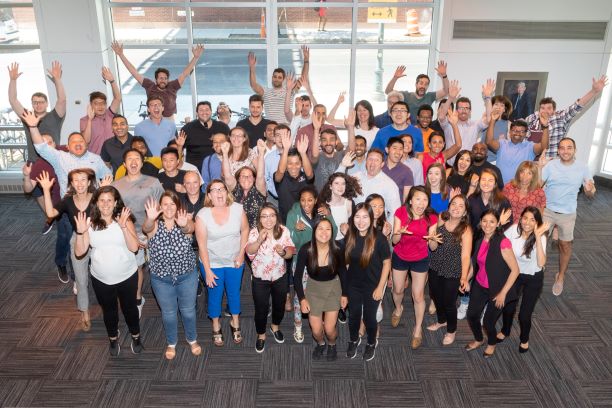
The global life experiences in the class make for such a vibrant community. They ask questions to deepen their understanding, and by doing so, we become better educators. The 2020 week-long program had 104 participants from 27 countries and six continents. The participants listen to a MIT fire hose of information during the day and apply the lessons in teams during the evening by going through simulations with coaching from experienced entrepreneurs.

Participants come together on their first day, and we put them through an introduction, then they jump right into entrepreneurial speed dating, pitching ideas, and form teams before they leave that evening. The balance of the rest of the week consists of the Disciplined Entrepreneurship (DE) framework, coaching, and ecosystem tours. The program is not for the faint of heart. It truly is a constant fire hose of content. EDP is more than an entrepreneurial mindset as these folks are building out ecosystems, starting companies, and came to the Entrepreneurship Development Program specifically to learn Disciplined Entrepreneurship. 

These entrepreneurs see the effect they can have in the world through entrepreneurship. After recovery from the week, one participant said, “I am already working on the social enterprise that I have been wanting to build for 10 years, but I didn’t know how to make it into a business.” I appreciate the opportunity to teach and coach in such a results-based program.

During the school year, 90% of my day to day is made up of teaching, leading programs, and supporting current MIT Students. About 10% of my day is working in Executive Education and community building. EDP is such an essential part of our ecosystem as it brings frameworks, application, and experience to people from all over the globe who are experienced executives but are looking to take their entrepreneurial initiatives to the next level.

EDP coaches

However, our MIT educators are not the only ones teaching about the entrepreneurial ecosystem. In EDP, we bring entrepreneurs who have launched after participating in our various entrepreneurship programs. Companies like AirWorks, Floating Point Group, CaroCare, and Ministry of Supply. We also introduce non-MIT related support like Greentown Labs and the Cambridge Innovation Center (CIC).

No one program can claim the success of any MIT startup, as it is the collective ecosystem that encourages those at MIT to reach back into the community to help others rise up. Many of the people who come to the Entrepreneurship Development Program are already active in their entrepreneurship ecosystems, bringing the Disciplined Entrepreneurship lessons to others. This is the impact of EDP.  We continue to foster the community.

Here is some of the feedback from participants:

MIT Entrepreneur Development Program, class of 2020

Dale Cree, CEO, 3EN Cloud ltd
“At the end of the day, it was absolute proof, you need to complete the 24 steps to have any chance at all. Greatest foundation for any business journey. MIT EDP.”

Kasper Juul, Director, External Innovation at LEO Science & Tech Hub
“The combination of inspiring lectures and practical exercises, with the support of experienced entrepreneurial mentors is simply invaluable. This makes for a very intense course with a steep learning curve that will push you to your limit while having lots of fun. Most importantly EPD makes you feel part of a community that will continue to support you on the entrepreneurial journey.”

Mariam AlEissa, Ph.D., Postdoctoral Research Fellow at MIT
“I’m so grateful to be part of the Entrepreneurship Development Program where I learned innovative ideas can’t be delivered without entrepreneurial skills. As a Saudi woman, I’m fortunate to live in a time where women empowered as part of 2030 vision and I’m trying my best to be ready to play an active role in my community at all levels.”

Dr. Dani Abu Ghaida, Technology Leader working with Middle East organizations to create, build and launch new ventures
“What particularly attracted me [to EDP] is to find answers on what I did wrong in the ventures I have led and that failed prior to EDP. EDP not only answered this question but gave me the motivation to move ahead and pursue multiple programs at MIT leading to the ACE [Advanced Executive Certificate] qualification I have now. This journey has equipped me with the tools that I need to answer all the management, strategy, innovation, operations, and supply chain challenges I can face as a venture leader, business executive, and a person who wants to change the world.”

Mary Rodgers, Innovation Community Manager, PorterShed (past participant)
“Since returning to Galway, MIT EDP has become an integral part of our daily working lives. Managing a co-working Tech Hub, I regularly meet with entrepreneurs at different stages of their life cycle. I used the DE [Disciplined Entrepreneurship] roadmap to refocus the companies, and provide an objective, practical, advice and actions to progress.”

Want to learn more? Visit these websites:

Entrepreneurship Development Program

Disciplined Entrepreneurship