From Dream to Reality: How Women Can Thrive as Entrepreneurs

International Women’s Day is an occasion to shine a spotlight on gender equity issues around the world. When women embrace entrepreneurship, they can expand opportunities to forge their own path and reap the economic rewards. If you’ve thought about starting your own business – even part-time or as a side hustle – there is a supportive community to help you explore this option.

The theme of this year’s International Women’s Day (#IWD2024) is to Inspire Inclusion (#InspireInclusion). As explained on the IWD site, when we inspire others to understand and value women’s inclusion, we help to build a better world. And when women themselves are inspired to be included, there’s a sense of belonging, relevance, and empowerment.

One of the ways organizations and groups can inspire inclusion is through action in building women’s economic empowerment. According to Equality Now, full and equal economic participation by women would increase global GDP by more than a quarter, representing nearly $28 trillion of additional shared wealth being contributed to the worldwide economy every year.

Women Entrepreneurs by the Numbers

Women entrepreneurs are a force to be reckoned with. Here’s an excellent list of recent statistics on women entrepreneurs compiled by Luisa Zhou, some of which I’ve highlighted below:

  • 42% of all U.S. businesses are owned by women
  • Women-owned businesses have grown 114% in the last two decades
  • Startups with all-women teams only received 1.9% of venture capital funding
  • About half of all startups in the U.S. are founded by women
  • One-third of businesses worldwide are owned by women
  • Lower-income countries have the highest participation (55.6%) of young female entrepreneurs

Interestingly, one in six women globally reported an intention to start a business in the near future. The highest entrepreneurial intention rates were observed in low-income countries, where approximately 28% of women expressed intentions to start a business. For these women, entrepreneurship is a way to change their life circumstances.

Why do Women Start their own Businesses?
Among all entrepreneurs, there are various reasons why someone decides to start their own business. At MIT, I worked with many women-led startups and the reasons are often connected to a passion or an experience in the founder’s life. Alicia Cong Rodriguez’ grandmother died of a heart attack when she was only 13 years old. This fueled her personal mission to co-found Bloomer Tech, a company that makes a bra that monitors women’s heart health, as she explains in this CBS News profile.

Yet, worldwide, more than 70% of women reported job scarcity as the motive behind their startups, according to the Global Entrepreneurship Monitor (GEM) Women’s Entrepreneurship report ‘22/’23. It is interesting to note the differences between necessity-based entrepreneurs and innovation-based entrepreneurs. Women and minority entrepreneurs are often necessity-based entrepreneurs – starting their own business after losing a job, to supplement their income, or to gain flexibility to attend to other demands in their lives. This doesn’t take anything away from their entrepreneurship. In fact, in addition to economic gain, necessity-based entrepreneurs are often motivated when traditional labor options are insufficient to meet their needs and goals.

How to Explore Entrepreneurship

If you’re considering becoming an entrepreneur, now might be the perfect time to explore opportunities – even for an entrepreneurial side hustle. You don’t necessarily have to leave your current job (and regular paycheck and benefits) just yet, but taking some time to delve into entrepreneurship can be immensely rewarding. Start by conducting research and testing the waters to gauge the viability of your business idea.

Fortunately, there are a wealth of resources available within the entrepreneurial community to support you, including networks specifically geared towards women in business. Look into organizations and programs designed to assist female entrepreneurs, such as Women’s Business Centers (part of the U.S. Small Business Administration). Additionally, take advantage of events and workshops hosted by colleges and universities, where you can connect with fellow entrepreneurs and gain valuable insights from experienced speakers.

Conferences serve as vibrant hubs for entrepreneurs to connect with like-minded individuals. When selecting a conference to attend, you could choose one that may be geared toward entrepreneurs, or it could be focused on the industry where you want to start your business. After attending an event, are you thinking, “I could do that!”? By immersing yourself in the conference environment and connecting with others who share your vision, you can enrich your entrepreneurial journey and expand your network of supportive peers and mentors.

LinkedIn is also an invaluable tool for entrepreneurs. Take advantage of its vast network to connect with other entrepreneurs in your industry. Don’t hesitate to reach out and request an informational interview. Use this opportunity to gain insights into an entrepreneur’s journey – ask about how they got started, the challenges they faced, and any advice they have for breaking into the field.

Resources for Women Entrepreneurs around the Globe

One place to start researching entrepreneurial opportunities is with the ebook I created titled, “An Introduction to Start-up Accelerator Programs around the World,” a free guide for entrepreneurs who may be exploring ways to start their own businesses, especially in countries outside the U.S.

I’ve found that diversity, thought leadership, and collaboration all work together to make the ecosystem of entrepreneurs a much richer place. To that end, this ebook includes information about entrepreneurship around the world to show how different countries support their entrepreneurs with various programs and accelerators.

Boston-area Resources for Women Entrepreneurs

Closer to home, I’ve also included a list of local resources. Boston and Cambridge are renown for some of the world’s most prestigious universities and they support the Boston area’s unique entrepreneurial DNA for success. MIT even offers a free online course on Becoming an Entrepreneur.

Here are several resources and organizations in the Boston and Cambridge area. For other regional areas, search online to find local resources. 

The key message here is that you’re not alone on this journey – there are people and resources ready to support and guide you as you explore the world of entrepreneurship. So, take that first step, and embrace the possibilities that lie ahead!

In my current role as an entrepreneurship consultant and coach, I help entrepreneurs as they explore their options. Please feel free to reach out.

How to Hire for Diversity and Reap the Benefits

Hiring struggles endure as companies try to employ and retain the talent needed to grow their businesses. The Great Resignation (or Great Reshuffle) continues in many industries as people consider new post-pandemic options. While nearly 4.3 million people in the U.S. quit their jobs in January (2022), there were also 11.3 million job openings, according to the latest report from the U.S. Department of Labor. What does this mean for hiring?

In my last blog post, I wrote about how to lead with empathy in hiring and recruitment practices. Part of leading with empathy is to make sure our workplaces are representative of the society we live in by implementing effective diversity, equity, and inclusion (DEI) hiring practices. This post will explore how companies and hiring managers can help make an impact, even when talent may be scarce.

There is much lip service given to diversity, equity, and inclusion, and some companies are making strides, but many companies are not. This quote resonated with me as a goal for DEI initiatives:

“As a society, if we begin to shape our practices around how we treat people, how our work environments are structured, the Great Reshuffle will end,” states Gina Ganesh, VP of People and Culture at Florence Healthcare. Treating all people well is the right thing to do. And hiring diverse candidates drives real progress, including bottom-line business results.

Diversity Drives Business Results

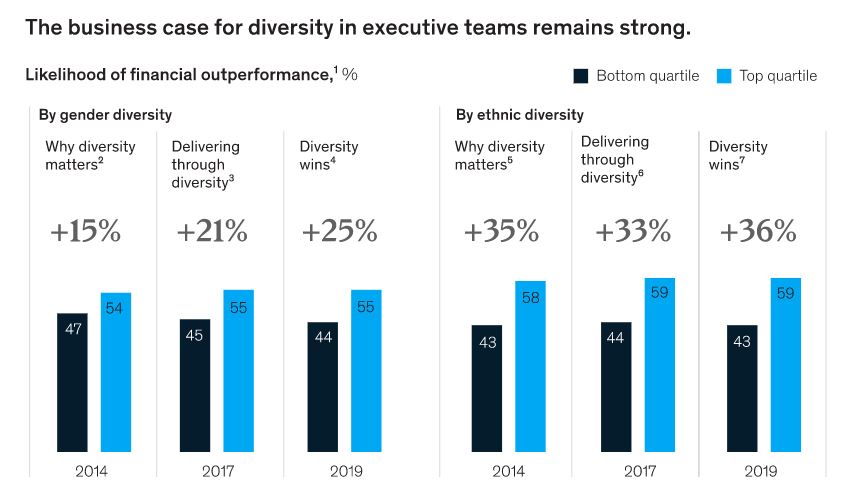
It has been proven that ethnically diverse companies perform 36% better than companies that are not. We’ll dive into that stat in a minute, but first, some important definitions and distinctions when thinking about a DEI recruiting strategy.

  • Diversity is the range of differences that make people unique, both seen and unseen. (Be mindful that diversity includes not only race and gender, but age, ethnicity, sexual orientation, physical disabilities, and neurodiversity).
  • Inclusion is an environment that engages multiple perspectives, different ideas, and individuals to define organizational policy and culture.

Remember, when you hire for diversity, you get the benefits of inclusion.

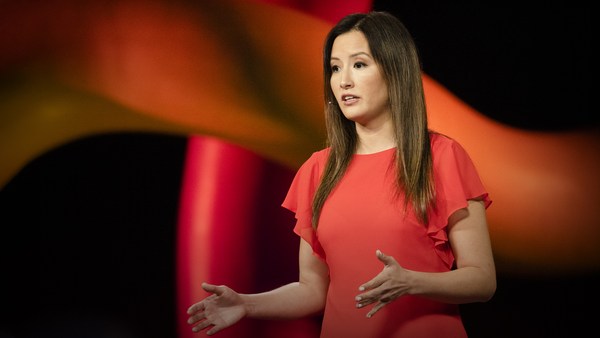
An important point according to Janet Stovall, Executive Communications Manager at UPS, in her TED talk. “Let’s be clear: diversity and inclusion are not the same things. Diversity is a numbers game. Inclusion is about impact. Companies can mandate diversity, but they have to cultivate inclusion.”  Stovall is also clear that businesses can be a key force to dismantle racism.

McKinsey has done a series of studies on the topic of DEI and the latest study encompasses 15 countries and more than 1,000 large companies. This latest report, titled Diversity Wins shows that the relationship between diversity on executive teams and the likelihood of financial outperformance has strengthened over time.

See original source for all chart footnotes.

McKinsey explored how different approaches to inclusion and diversity could have shaped the trajectories of the companies in their data set and found two critical factors: a systematic business-led approach to inclusion and diversity, and bold action on inclusion.

One Leader’s Story on Building a Diverse Organization

The business case for DEI is there, but it’s not always easy. I’d like to (anonymously) share the story of a friend of mine who was trying to increase diverse hiring his organization.

He was the head of AI software for products at a Fortune 500 company and specifically set out to hire more female engineers. He met with his managers and discussed ideas. He challenged his staff to look through LinkedIn for candidates. He spent one morning combing through LinkedIn and personally wrote 100 cold/semi-cold emails to prospects.

I think it’s important to note that he didn’t delegate it out. From this initial outreach, he received 35 responses, and he reached out personally to all.  Then he interviewed and hired several of these women.  After a period of one year, 20% of his team were women – from less than 5% – and the percentages were still climbing.  

A couple of things had to happen to make this work. He told his staff that they needed to get involved and invest in their networks – both college alumni networks and other networks of friends and past colleagues.  He made it clear that hiring for diversity is key in jobs at every level. He also made sure that candidates met a diverse group of people within the company during interviews.  His staff was taught to follow up with every candidate personally.  These may seem like small things, but they were game changers for both the new employees and the organization’s depth.

Unfortunately, there is bad news here. Two years after this initiative, there was a full reorganization and my friend parted ways with this company. The commitment to hiring for diversity was not sustained, the DEI focus faded within the organization, and progress was lost. I believe that the moral of this story is that enabling real change takes both time and commitment, and awareness is only the first step.

Beyond the Rooney Rule

The “Rooney Rule” – a diversity initiative started by the National Football League that calls for interviewing minority candidates for top jobs – has been adopted by corporate America, but experts believe it hasn’t made much of an impact.

As companies release detailed information about the diversity of their workforces, the data shows that women and people of color are well-represented in the lowest rungs of many company workforces, but there’s often little representation in leadership roles and board positions. When companies adopt a Rooney Rule, they’re pledging to add at least one candidate to their interview pool to increase gender and racial diversity, but that’s usually not enough to foster real change.

To make a meaningful impact, hiring managers should aim to interview a slate of candidates that’s 30% diverse, according to Alina Polonskaia, global leader of the D&I practice at executive recruiter Korn Ferry. Companies could also set a standard of having their executive ranks mirror the gender and race breakdown of the usually much-more-diverse entry-level workforce. In addition, employers should also use the same diversity standards they are applying for new hires to people being considered for promotions.

How Diversity can be Your Superpower

Let’s take a look at a study focused on hiring for B2B sales roles. This study by Forrester, commissioned by Outreach, confirms it is time for us all to commit to diversity, equity, and inclusion. Since sellers are the first point of contact for a company, sales reps must represent the world around them, and organizations must commit to DEI or risk losing revenue and talent.

Sales leaders understand the need for diverse teams; 67% of respondents say it’s important for their team to represent the world around them. However, although sales respondents in North America say DEI is important, they are not ranking DEI efforts over other priorities. Respondents ranked almost every other sales leadership skill before DEI. Yet, customers are demanding diversity now.

A separate Forrester Study on Diversity Drives Sales Success, reports the following metrics:

  • 60% of respondents stated that diversity within their sales team has contributed to their teams’ success.
  • 82% predict that the racial or ethnic diversity of their sales team will be equally or more important in the next two years.
  • 72% believe that DEI will play an equally important or more important role in business decisions in the next two years.

They conclude that companies with strong DEI practices have better-performing sales teams, including higher forecasts, higher conversion rates, and higher sales attainment.

How to Walk the Walk

The Inclusion Solution blog points out, “it’s not just about introducing shiny new initiatives and hiring the first head of DEIBJ (diversity, equity, inclusion, belonging, and justice) — it’s about displaying a real, sustainable commitment to these efforts through financial and human resources deployed over time… not just when the cameras are rolling and the topic is trending.” 

To that end, here are some strategies and ideas on how to walk the walk and incorporated diversity in your hiring to reap the benefits of inclusivity. Some are tactical tips, others are broader, more strategic initiatives gathered from the reports, experts, and sources mentioned in this blog.

  • Focus on developing an equitable talent process, purposely create diverse and inclusive teams, and create development programs for under-represented groups. (Korn Ferry)
  • When conducting campus recruiting, think beyond Ivy League schools and schools you may be personally connected to, and consider Minority-Serving Institutions (MSIs) (Excelencia in Education)
  • A “work from anywhere” environment can foster diversity hires. In an all-virtual environment, there are very few limitations in terms of where to find talent. (Bloomberg)
  • Challenge your definitions of “professionalism” and “leadership” within your organization – and then hire and promote diverse leaders. (Mac’s List)
  • Broaden your lens on DE&I, including embracing neurodiversity. One big benefit of an inclusive work culture is that it fosters diversity of thought, different approaches to work, innovation, and creativity. (Deloitte)
  • Provide education around and try to use inclusive language. (Mac’s List)
  • Training is a good start, but mature organizations do more. Leaders need to model inclusive behavior, and the organization as a whole needs to value and measure progress toward DEI goals. (Forrester)
  • Strengthen leadership accountability and capabilities for inclusion and diversity (I&D). Companies should place their core-business leaders and managers at the heart of the I&D effort—beyond the HR function or employee resource-group leaders. (McKinsey)
  • Enable equality of opportunity through fairness and transparency. Deploy analytics tools to show that promotions, pay processes, and the criteria behind them, are transparent and fair. (McKinsey)
  • If companies want to do a better job of retaining diverse talent, they can’t go back to “business as usual.” It’s time to make work more equitable, and while flexibility is not the panacea, it is a step in the right direction. (Harvard Business Review)
  • Workers overall want to feel like their boss cares about them. Gen Z wants a culture built on mental health and wellness. (LinkedIn)
  • Flexibility is increasingly prized, particularly by underrepresented groups. Leaders who hope to retain top talent and maintain diversity must act swiftly and deliberately to counter the forces of proximity bias. (i.e., if managers spend most of their time working in the office, that is likely to lead to a double standard of valuing employees who also come into the office). (Future Forum)
  • Continue pushing the conversation forward, even if you don’t have all the answers. DEI strategy is an essential element of building a strong business that is able to attract and retain great talent and connect with a diverse customer base. (Forrester)

As you search out new talent, there are a lot of nuances that you need to consider. Your HR team may have guidelines, and you may want to “go with your gut” in terms of what is right, but there are many factors and issues involved. Educate yourself and become an agent for change, dedicating the time and commitment necessary to foster inclusivity for all.