
As 9-to-5 Office Jobs Become Extinct, How Are We Preparing Our Next Generation of Corporate Leaders?

Recently, I’ve been coaching young professionals seeking the second or third jobs of their careers. Many started their careers with jobs they couldn’t refuse—positions that allowed them to live in their preferred city, pay back student loans, or get off the family payroll. After a few years, however, they’ve realized that the dream job they once sought isn’t aligning with their current reality, and they feel the need for a change.

In this post, I’ll explore what this means for both these employees and the employers who need to recruit, train, and retain top talent to build the next generation of leaders.

A Shift in Traditional Employment

Reid Hoffman, co-founder of LinkedIn, predicted that 9-to-5 jobs are dying and will be extinct by 2034, as shared in this post on LinkedIn and an  X thread by entrepreneur and investor Neal Taparia. Hoffman also predicts that within a decade, 50% of the US population will be freelancers—and they’ll earn more than traditional employees. As AI enters the picture, personal branding and standing out among your peers will become more important than ever.

Where does this leave those employees just starting in their careers? They are facing a new workplace reality due to the ripple effect of the COVID-19 pandemic which enabled a remote work environment for many professions disrupting the traditional requirements to be in the office to get your work done. As the nature of work shifts, we are all grappling with what works best for each company’s environment, and I’m finding that the supports that were once built into corporate onboarding and training have slipped tremendously. Unfortunately, this does a disservice both to employees and the companies they work for.

One key factor contributing to their sense of disconnection is companies’ failure to integrate new hires effectively, particularly in hybrid or fully remote work setups. This lack of inclusion breeds isolation and significantly hampers productivity and job satisfaction.

Working in the office can present a Catch-22. Interpersonal relationships with co-workers and learning by osmosis are real benefits of in-person workplaces that can get lost when working remotely. However, forced office time often backfires and causes resentment when employees find themselves in impersonal environments with few familiar faces when they arrive. Many times, in-the-office time is not coordinated by teams to gain the benefit of in-person meetings and mentor sessions. The lack of integration and the prevalence of closed office doors contribute to a disengaging experience that can be emotionally draining. As a result, early-career employees— who often have long commutes due to the high cost of city living—feel that they have wasted time commuting just to “show up.”  

So, while companies invest heavily in recruiters and AI-driven tools to screen resumes, there seems to be a lack of emphasis on employee development once employees are onboarded. This glaring oversight results in fewer growth opportunities leading to an absence of employee loyalty. A downward spiral ensues, as employees feel like they have to leave the company to seek new ways to advance their careers. It is a frustrating situation for HR managers, company managers, and employees.

Where Talented Young People Are Struggling

Here are some real-life examples of how companies have neglected to train and prepare new employees, leading to discouragement and ultimately turnover in some cases.

  • One company placed an employee in a sales role without providing any sales training, only to criticize them for not meeting quotas. Without mentorship, coaching, or guidance, the promising employee eventually became disheartened and risked being fired.
  • Another case involved a new hire asked to represent their company at a tradeshow. They were assigned to work the tradeshow booth without adequate training in how to speak about the company’s products and services. The lack of customer and marketing training paired with insufficient product knowledge meant that the new hire could not generate leads or effectively engage with potential clients. A brief, targeted training session could have significantly improved their performance and outreach.
  • In an educational setting, a recently hired teacher was isolated when assigned to a floor with veteran educators who were resistant to learning about new teaching methods. Despite the new teacher’s eagerness to implement innovative concepts, the resistance from experienced colleagues stifled their efforts and limited their impact, as well as prevented the teacher from bonding with new colleagues.

What has Changed

In contrast, when I was starting my career, companies like Honeywell and IBM offered rotation programs to expose new engineers to various areas, along with classroom training, guest speakers, and supportive mentors. This scaffolding for learning fostered both loyalty and job satisfaction. Unfortunately, many modern companies lack the resources or commitment to provide similar support, leading to diminished employee engagement and enthusiasm.

So, how did we get here? The gap between initial enthusiasm and long-term satisfaction is widening due to inadequate support systems, poor integration, and a lack of meaningful growth opportunities. Addressing these issues is crucial for fostering a more engaged and loyal workforce.

Strategies for Employers

Here are 11 strategies companies can implement to improve employee satisfaction, engagement, and development for long-term employees with a multifaceted approach:

1. Create Clear Career Pathways – Develop personalized career development plans that outline potential career paths for growth opportunities and clearly define promotion requirements.

2. Enhance Learning and Development Opportunities – Offer continuous learning opportunities through workshops, seminars, online courses, and certifications. Implement mentorship or coaching programs where experienced employees guide and support newer or less experienced staff. Provide leadership training and succession planning to prepare employees for future roles.

3. Foster a Supportive Work Environment – Cultivate an inclusive and supportive culture where all employees feel valued and respected. Promote work-life balance through flexible work arrangements, remote work options, and adequate vacation time.

4. Recognize and Reward Contributions – Implement regular recognition programs to celebrate achievements and milestones and ensure competitive compensation packages are regularly reviewed to reflect performance and market conditions.

5. Provide Meaningful Work and Autonomy – To keep employees engaged, assign meaningful projects that align with their skills and interests. Allow employees to take ownership of their work and make decisions that impact their roles.

6. Improve Communication and Feedback – Conduct one-on-one meetings to discuss career goals, feedback, and concerns.Maintain open communication channels for employees to voice their ideas, feedback, and concerns.

7. Support Personal Well-being – Offer programs that support mental, emotional, and physical well-being, such as counseling services, fitness memberships, and wellness initiatives. Provide resources and training for stress management and coping strategies.

8. Encourage Innovation and Creativity – Create platforms for employees to share innovative ideas, participate in brainstorming sessions, and allow employees to work on creative projects or initiatives outside their regular responsibilities.

9. Promote Team Collaboration – Invest in team-building activities that foster collaboration and strengthen relationships among team members. Encourage employees to work on cross-functional projects to broaden their experience and network within the company.

10. Provide Robust Onboarding and Integration – Ensure new employees receive comprehensive onboarding so they can integrate smoothly into the company culture and understand their role. Facilitate opportunities for new hires to build relationships and connect with their colleagues through social events and team activities.

11. Adapt to Changing Needs – Be adaptable and responsive to employees’ evolving needs and preferences, including changes in work patterns or personal circumstances. Continuously gather and act on employee feedback to improve policies and practices.

By implementing these strategies, companies can enhance employee satisfaction, engagement, and development, leading to a more motivated and loyal workforce. Leaders must champion these initiatives and ensure they are integrated into the company’s culture and operations, which can be especially difficult with a remote or hybrid working environment—but it is essential to put in the extra effort to make it work.

Of course, new employees need to do their part as well—simply changing jobs when you are dissatisfied with your current situation is not a solution. I’ll address how employees can proactively manage their careers in my next post.

[Image source: AI generated]

How to Hire for Diversity and Reap the Benefits

Hiring struggles endure as companies try to employ and retain the talent needed to grow their businesses. The Great Resignation (or Great Reshuffle) continues in many industries as people consider new post-pandemic options. While nearly 4.3 million people in the U.S. quit their jobs in January (2022), there were also 11.3 million job openings, according to the latest report from the U.S. Department of Labor. What does this mean for hiring?

In my last blog post, I wrote about how to lead with empathy in hiring and recruitment practices. Part of leading with empathy is to make sure our workplaces are representative of the society we live in by implementing effective diversity, equity, and inclusion (DEI) hiring practices. This post will explore how companies and hiring managers can help make an impact, even when talent may be scarce.

There is much lip service given to diversity, equity, and inclusion, and some companies are making strides, but many companies are not. This quote resonated with me as a goal for DEI initiatives:

“As a society, if we begin to shape our practices around how we treat people, how our work environments are structured, the Great Reshuffle will end,” states Gina Ganesh, VP of People and Culture at Florence Healthcare. Treating all people well is the right thing to do. And hiring diverse candidates drives real progress, including bottom-line business results.

Diversity Drives Business Results

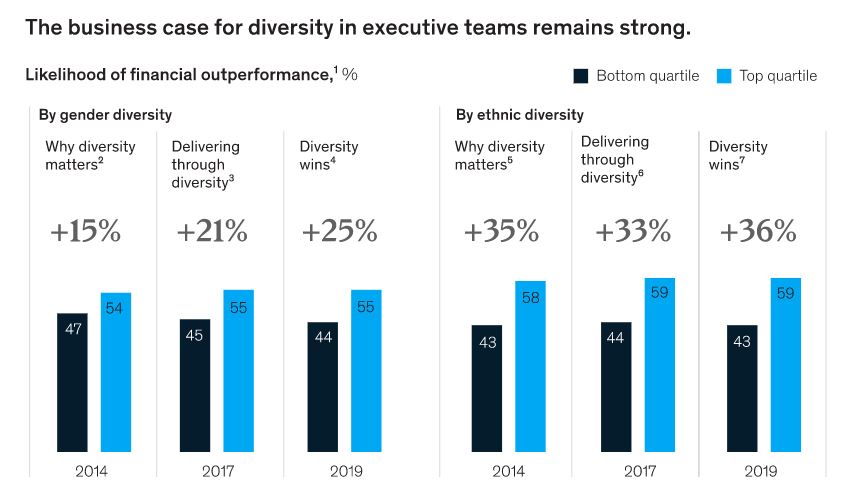
It has been proven that ethnically diverse companies perform 36% better than companies that are not. We’ll dive into that stat in a minute, but first, some important definitions and distinctions when thinking about a DEI recruiting strategy.

  • Diversity is the range of differences that make people unique, both seen and unseen. (Be mindful that diversity includes not only race and gender, but age, ethnicity, sexual orientation, physical disabilities, and neurodiversity).
  • Inclusion is an environment that engages multiple perspectives, different ideas, and individuals to define organizational policy and culture.

Remember, when you hire for diversity, you get the benefits of inclusion.

An important point according to Janet Stovall, Executive Communications Manager at UPS, in her TED talk. “Let’s be clear: diversity and inclusion are not the same things. Diversity is a numbers game. Inclusion is about impact. Companies can mandate diversity, but they have to cultivate inclusion.”  Stovall is also clear that businesses can be a key force to dismantle racism.

McKinsey has done a series of studies on the topic of DEI and the latest study encompasses 15 countries and more than 1,000 large companies. This latest report, titled Diversity Wins shows that the relationship between diversity on executive teams and the likelihood of financial outperformance has strengthened over time.

See original source for all chart footnotes.

McKinsey explored how different approaches to inclusion and diversity could have shaped the trajectories of the companies in their data set and found two critical factors: a systematic business-led approach to inclusion and diversity, and bold action on inclusion.

One Leader’s Story on Building a Diverse Organization

The business case for DEI is there, but it’s not always easy. I’d like to (anonymously) share the story of a friend of mine who was trying to increase diverse hiring his organization.

He was the head of AI software for products at a Fortune 500 company and specifically set out to hire more female engineers. He met with his managers and discussed ideas. He challenged his staff to look through LinkedIn for candidates. He spent one morning combing through LinkedIn and personally wrote 100 cold/semi-cold emails to prospects.

I think it’s important to note that he didn’t delegate it out. From this initial outreach, he received 35 responses, and he reached out personally to all.  Then he interviewed and hired several of these women.  After a period of one year, 20% of his team were women – from less than 5% – and the percentages were still climbing.  

A couple of things had to happen to make this work. He told his staff that they needed to get involved and invest in their networks – both college alumni networks and other networks of friends and past colleagues.  He made it clear that hiring for diversity is key in jobs at every level. He also made sure that candidates met a diverse group of people within the company during interviews.  His staff was taught to follow up with every candidate personally.  These may seem like small things, but they were game changers for both the new employees and the organization’s depth.

Unfortunately, there is bad news here. Two years after this initiative, there was a full reorganization and my friend parted ways with this company. The commitment to hiring for diversity was not sustained, the DEI focus faded within the organization, and progress was lost. I believe that the moral of this story is that enabling real change takes both time and commitment, and awareness is only the first step.

Beyond the Rooney Rule

The “Rooney Rule” – a diversity initiative started by the National Football League that calls for interviewing minority candidates for top jobs – has been adopted by corporate America, but experts believe it hasn’t made much of an impact.

As companies release detailed information about the diversity of their workforces, the data shows that women and people of color are well-represented in the lowest rungs of many company workforces, but there’s often little representation in leadership roles and board positions. When companies adopt a Rooney Rule, they’re pledging to add at least one candidate to their interview pool to increase gender and racial diversity, but that’s usually not enough to foster real change.

To make a meaningful impact, hiring managers should aim to interview a slate of candidates that’s 30% diverse, according to Alina Polonskaia, global leader of the D&I practice at executive recruiter Korn Ferry. Companies could also set a standard of having their executive ranks mirror the gender and race breakdown of the usually much-more-diverse entry-level workforce. In addition, employers should also use the same diversity standards they are applying for new hires to people being considered for promotions.

How Diversity can be Your Superpower

Let’s take a look at a study focused on hiring for B2B sales roles. This study by Forrester, commissioned by Outreach, confirms it is time for us all to commit to diversity, equity, and inclusion. Since sellers are the first point of contact for a company, sales reps must represent the world around them, and organizations must commit to DEI or risk losing revenue and talent.

Sales leaders understand the need for diverse teams; 67% of respondents say it’s important for their team to represent the world around them. However, although sales respondents in North America say DEI is important, they are not ranking DEI efforts over other priorities. Respondents ranked almost every other sales leadership skill before DEI. Yet, customers are demanding diversity now.

A separate Forrester Study on Diversity Drives Sales Success, reports the following metrics:

  • 60% of respondents stated that diversity within their sales team has contributed to their teams’ success.
  • 82% predict that the racial or ethnic diversity of their sales team will be equally or more important in the next two years.
  • 72% believe that DEI will play an equally important or more important role in business decisions in the next two years.

They conclude that companies with strong DEI practices have better-performing sales teams, including higher forecasts, higher conversion rates, and higher sales attainment.

How to Walk the Walk

The Inclusion Solution blog points out, “it’s not just about introducing shiny new initiatives and hiring the first head of DEIBJ (diversity, equity, inclusion, belonging, and justice) — it’s about displaying a real, sustainable commitment to these efforts through financial and human resources deployed over time… not just when the cameras are rolling and the topic is trending.” 

To that end, here are some strategies and ideas on how to walk the walk and incorporated diversity in your hiring to reap the benefits of inclusivity. Some are tactical tips, others are broader, more strategic initiatives gathered from the reports, experts, and sources mentioned in this blog.

  • Focus on developing an equitable talent process, purposely create diverse and inclusive teams, and create development programs for under-represented groups. (Korn Ferry)
  • When conducting campus recruiting, think beyond Ivy League schools and schools you may be personally connected to, and consider Minority-Serving Institutions (MSIs) (Excelencia in Education)
  • A “work from anywhere” environment can foster diversity hires. In an all-virtual environment, there are very few limitations in terms of where to find talent. (Bloomberg)
  • Challenge your definitions of “professionalism” and “leadership” within your organization – and then hire and promote diverse leaders. (Mac’s List)
  • Broaden your lens on DE&I, including embracing neurodiversity. One big benefit of an inclusive work culture is that it fosters diversity of thought, different approaches to work, innovation, and creativity. (Deloitte)
  • Provide education around and try to use inclusive language. (Mac’s List)
  • Training is a good start, but mature organizations do more. Leaders need to model inclusive behavior, and the organization as a whole needs to value and measure progress toward DEI goals. (Forrester)
  • Strengthen leadership accountability and capabilities for inclusion and diversity (I&D). Companies should place their core-business leaders and managers at the heart of the I&D effort—beyond the HR function or employee resource-group leaders. (McKinsey)
  • Enable equality of opportunity through fairness and transparency. Deploy analytics tools to show that promotions, pay processes, and the criteria behind them, are transparent and fair. (McKinsey)
  • If companies want to do a better job of retaining diverse talent, they can’t go back to “business as usual.” It’s time to make work more equitable, and while flexibility is not the panacea, it is a step in the right direction. (Harvard Business Review)
  • Workers overall want to feel like their boss cares about them. Gen Z wants a culture built on mental health and wellness. (LinkedIn)
  • Flexibility is increasingly prized, particularly by underrepresented groups. Leaders who hope to retain top talent and maintain diversity must act swiftly and deliberately to counter the forces of proximity bias. (i.e., if managers spend most of their time working in the office, that is likely to lead to a double standard of valuing employees who also come into the office). (Future Forum)
  • Continue pushing the conversation forward, even if you don’t have all the answers. DEI strategy is an essential element of building a strong business that is able to attract and retain great talent and connect with a diverse customer base. (Forrester)

As you search out new talent, there are a lot of nuances that you need to consider. Your HR team may have guidelines, and you may want to “go with your gut” in terms of what is right, but there are many factors and issues involved. Educate yourself and become an agent for change, dedicating the time and commitment necessary to foster inclusivity for all.

Leading with Empathy – A New Outlook on Hiring and Retention

As we enter the new year, HR managers and CEOs face a wake-up call. Employee recruitment and retention are major priorities for so many businesses this year, with companies unable to fill positions as we face continued uncertainty with COVID and the Great Resignation – now also being termed the Great Reshuffle.

The most recent statistics from the U.S. labor department said there were 10.6 million job openings at the end of November 2021 and 6.9 million unemployed people – 1.5 jobs per unemployed person. The number of “quits” hit a new high of 4.5 million in November. An article in The Guardian explains, “Quitting, most economists will tell you, is usually an expression of optimism. And yet, 2021’s quits happened against a larger economic picture that remains difficult to interpret with confidence.”

Some of the reasons people are quitting their jobs, according to USA Today and The Guardian, include:

  • Retirement – Most of the 5 million people who have left the labor force since the start of the pandemic are over 55 and have retired – early or naturally.
  • Career or industry switching – Others are switching careers or industries, for example, from restaurants and hotels to technology and warehousing, leaving some sectors with lots of openings and fewer candidates to fill them. Not surprisingly, given the stress on educators over the past two years, teachers are most likely to leave the labor force as compared to their counterparts in other industries.
  • Work-life balance – Thirteen percent of workers said they quit because their jobs didn’t provide work-life balance.
  • Care insecurity – Related to work-life balance, mothers with college degrees and telework-compatible jobs were more likely to exit the labor force and more likely to be on leave than women without children. One of the underlying reasons is an unequal distribution of labor at home and a critical degree of burnout contributing to “care insecurity.” Care insecurity is defined as uncertainty about daycare and school schedules that are unpredictably interrupted by periods of quarantine prompted by exposure to COVID.
  • Entrepreneurship – One-third of workers quit jobs to launch businesses. This may be either necessity- or innovation-based entrepreneurs.

The short-term outlook for the labor market suggests workers are likely to continue to have considerable bargaining power in 2022, says Indeed in its 2022 Labor Market Outlook report. But interestingly, job seekers remain hesitant. Active job search – that is, people taking specific steps to land work, like responding to job ads – hasn’t budged since the summer.

Where does all of this leave employers as they seek to recruit solid candidates to fill open positions?

Recruiting During a Time of Resentment

From the conversations I’ve had with friends, family, and colleagues recently, businesses that are hiring aren’t doing themselves any favors. Too many companies are approaching recruiting without empathy making it difficult to recruit good people. At the same time, prospective employees are hesitant and may have negative experiences with previous employers. Maybe it’s time for HR Managers to take a step back and look at their hiring processes.

You’re essentially recruiting during a time of resentment. People are disheartened, they’re tired, they’re sick of COVID, and at times sick from COVID. They may be working in an industry, such as healthcare, teaching, hospitality, or retail, where they are on the front lines every day and are looking for something different and less stressful. On the other hand, many office workers have the advantage of being able to work remotely, but that has its challenges as well. Are they being supported and mentored? Are they learning and growing? If this is going to be the new normal – rather than just a phase to get through – are you fully invested in making it successful?

New recruits will be precious resources in your company. Do you understand how to communicate effectively and listen to their thoughts and ideas?

5 Tips for Hiring and Retaining Employees with Empathy

Here’s a collection of tips for hiring with empathy. I believe that companies who approach their hiring process this way demonstrate to recruits that they support their employees and provide a positive work environment. Empathy then needs to be reflected in the workplace to retain your talent.

  1. Stop Ghosting Prospects

Maybe this should be common sense, but it’s not. If a candidate has taken the time to interview with you, they at least deserve a response – positive or negative. And a candidate who may not be right for a specific position today may be worth connecting with in the future, so keep that door open. Although many companies are using recruiting technology to automate the hiring process, we need to remember that there are real people behind each resume.

Fifty-two percent of job hunters say a lack of response from employers is their biggest frustration, according to Websolutions. In the current hiring environment, candidates have higher expectations for proactive, transparent, and frequent communications from employers. This needs to be communicated from the heads of HR to all the hiring managers involved in the process. If your current screening process is handled by a bot, you could be losing out to great people including referrals from current employees.

2. Prioritize Soft Skills

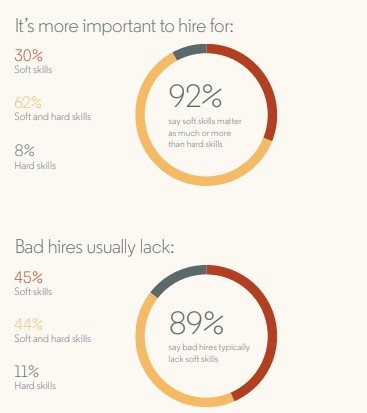
LinkedIn’s Global Talent Trends survey shows that bad hires are almost never a matter of hard skills alone. Prioritize soft skills – such as creativity, persuasion, collaboration, adaptability, and time management – in your hiring process. Although hard skills certainly matter, most hiring and firing decisions come down to soft skills.

 Part of the issue is that soft skills are more difficult to evaluate than hard skills. You can reasonably determine if a programmer has the right coding skills, or a translator has the right language skills, to perform adequately in their jobs. However, identifying poor soft skills is much harder, which is why this is often discovered too late, after a hire has been made.


Source: LinkedIn

3. Fully support Flexibility and Remote Work

Pre-pandemic, businesses expected that in five years 38% of their remote workforce would be fully remote, while today they expect 58% to be fully remote in five years, says Upwork in its Future Workforce report.

Career Builder adds that 35% of job seekers say they will turn down an offer if the employer does not offer a remote work option. The pandemic has forced the issue of remote work and flexible work schedules, making it a priority for employees. As companies consider return-to-the-office policies, they must realize there has been a mindset shift for many employees, and flexibility is now valued more than ever. It may be better for business too.

An Airtasker survey shows on average, remote employees work 1.4 more days every month, or 16.8 more days every year, than those who work in an office – and on workdays, they spend more time getting things done. Many workers are more productive and less stressed in a work-from-home environment since there is no commute, less water cooler talk, and more opportunity to fit exercise into their daily routine.


Source: Airtasker

4. Hire People You want to Coach

As a certified, professional coach, I spend time coaching people on energy leadership, and how you “show up” truly matters. Are you hiring people who will show up with an positive attitude and a mindset to think out of the box, bring all their creative skills, and work as a team?

Companies need to look at their interviewing process in a couple of ways. Are they looking to find the perfect candidate, or can they hire for aptitude and attitude? If they can identify the right aptitude and attitude, will the company culture embrace that and provide the training to help them grow? You may want to map out your hiring process from the humanistic viewpoint.

5. Listen to People to Retain Them

Once you’ve hired good people, you need to work hard to keep them. According to a recent Fast Company article, 2022 will be a key year for companies to live up to their promises to employees, or risk losing them. The best way to retain workers includes listening to their needs, accommodating their different work styles, and addressing inequities.

One member of the Fast Company Impact Council, Angie Klein, CEO of Visible, predicts, “We’re going to see a pretty big shift from talking about The Great Resignation to ‘The Great Retention,’ with [companies] focused on doing what it takes to keep talent. Employees aren’t really leaving because they’re unsatisfied—some are—but because they want to see what’s out there at a time when it seems far less risky to do so. Putting in proactive-retention measures while ensuring that we manage to drive meaning and purpose—there will be a heavy focus in retention like we have never seen before in corporate America.”

One employee retention tool that is gaining popularity is the “Stay Interview,” where a manager sits down with an employee to explore what it takes them to stay at the company. Ideally, these are regularly occurring conversations, built on a foundation of trust, where the employer doesn’t only focus on the job, but the individual’s professional and life goals.

Conclusion

Recruiting and retention are always challenging, but our current environment makes it even more so. However, I don’t believe the number of jobs out there is the reason you can’t find good people. I believe the primary issue is that companies are not putting the proper emphasis on recruiting and retaining talent, including a humanistic approach.

To find the right people, you may want to look at your processes and see if you can create a more empathetic way to attract and keep the best people.